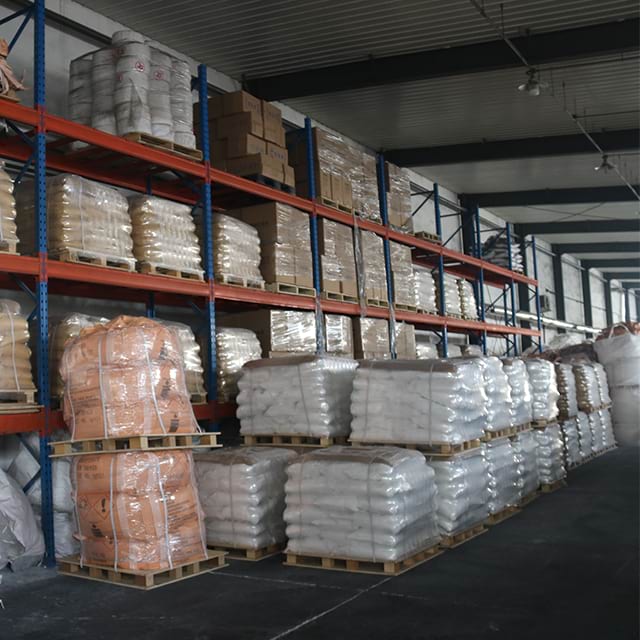
PVC manufacturing demands a delicate balance. Formulators constantly weigh raw material costs against the need for flawless thermal stability. They also strive for perfect initial color hold during production. Barium Hydroxide Monohydrate serves as a critical foundation in mixed-metal liquid and solid stabilizers. It dictates the overall success of the extrusion or calendering process. However, hidden variables often derail otherwise perfect formulations. Trace iron impurities—even at seemingly negligible parts-per-million levels—can trigger rapid polymer degradation. These microscopic contaminants escalate defect rates quickly. They severely impact your formulation economics. This guide explores how specific iron concentrations affect PVC performance. We will examine the underlying chemistry of polymer degradation. You will learn how to strategically match raw material purity grades to your unique manufacturing applications. Our goal is to help you optimize both product quality and total production costs.
Key Takeaways
Barium Hydroxide Monohydrate acts as a potent acid scavenger in PVC, but high iron impurities can negate its stabilizing effects by catalyzing dehydrochlorination.
10ppm Fe: Essential for high-transparency, medical-grade, or premium calendering applications where color shift (yellowing) is strictly prohibited.
20ppm Fe: The industry standard for general-purpose profiles, wire, and cable, balancing acceptable thermal stability with moderate cost.
30ppm Fe: A cost-effective specification reserved for heavily pigmented, opaque, or thick-walled applications (e.g., dark PVC pipes) where early color hold is less critical.
The Role of Barium Hydroxide Monohydrate in PVC Stabilizer Systems
Business Problem Framing
Polyvinyl chloride naturally degrades at standard processing temperatures. The polymer backbone is highly vulnerable when exposed to temperatures between 160°C and 200°C. Manufacturers require reliable mixed-metal stabilizers to prevent structural failure. Without proper stabilization, the plastic quickly discolors and loses its mechanical integrity. Squeezed profit margins force compounders to seek cost-effective stabilizing solutions. They must balance raw material expenditure against strict quality control standards. Any compromise in thermal stability leads to unacceptable scrap rates. This reality makes selecting the right stabilizer components a critical business decision.
Mechanism of Action
Thermal degradation of PVC initiates a dangerous chain reaction. The process releases hydrochloric acid (HCl) gas. This free acid further accelerates the breakdown of surrounding polymer chains. Formulators deploy Barium Hydroxide to intercept this destructive cycle. It functions as a highly efficient acid scavenger. The compound reacts directly with the liberated HCl. This neutralization forms stable barium chloride and water. Removing the free acid halts the auto-catalytic degradation process. It preserves the integrity of the polymer matrix during high-shear extrusion or milling.
Synergy with Zinc
Modern PVC formulations rely heavily on the Ba-Zn synergistic effect. Zinc compounds provide excellent early color retention. However, zinc chloride forms rapidly during processing. Zinc chloride is a strong Lewis acid. It promotes sudden, catastrophic polymer degradation known as "zinc burn." The product turns black almost instantly. Barium intercepts this fatal reaction. It undergoes a cation exchange with the zinc chloride. This regenerates the active zinc stabilizer. It extends the functional life of the entire stabilizer package. This partnership ensures smooth processing without sudden thermal failure.
Success Criteria
Evaluating the integration of barium-based stabilizers requires specific performance metrics. Successful formulations must achieve three primary objectives.
Extended dynamic heat stability: The material must survive prolonged residence times inside the extruder without degrading.
Minimal plate-out: Stabilizer components must not separate and stick to the processing equipment.
Excellent early color preservation: The finished product must remain visually pristine immediately after cooling.
Hitting these targets requires high-quality raw materials. Impurities heavily compromise these success criteria.
The Chemistry of PVC Degradation: Why Iron Impurities Matter
The Iron Catalyst Effect
Trace elements profoundly alter chemical reactions. Iron acts as a powerful Lewis acid within the PVC matrix. Even minute amounts disrupt the stabilization process. Iron attacks vulnerable allylic chloride sites along the polymer chain. It strips chlorine atoms away rapidly. This action catalyzes rapid dehydrochlorination. Chemists refer to this as "zipper degradation." The HCl unzips down the carbon backbone. High iron content effectively fights against the stabilizer. It accelerates the exact degradation process your additives are trying to stop.
Impact on Visual Quality
Zipper degradation permanently alters the molecular structure of the plastic. The loss of HCl leaves behind conjugated double bonds. These are known as polyenes. The human eye perceives these structural changes as discoloration. A sequence of seven double bonds appears light yellow. As the sequence lengthens, the color darkens. The plastic shifts from yellow to brown, and eventually to a deep red or black. Iron directly maps to the speed and severity of this visual deterioration. High-iron impurities guarantee unacceptable color shifts in clear or white applications.
Impact on Mechanical Properties
Visual defects represent only surface-level problems. Accelerated thermal degradation destroys the internal structural integrity of PVC. The polymer chains begin to cross-link prematurely. They also undergo chain scission. This reduces the average molecular weight of the plastic. The resulting product suffers severe mechanical deficits. Tensile strength drops significantly. Impact resistance plummets, leaving the material brittle. Furthermore, long-term weatherability degrades. Outdoor products like window profiles will crack and fail prematurely under UV exposure if the initial processing degradation was too severe.
Formulation Trade-offs
Some formulators attempt to hide the effects of low-quality raw materials. They use inferior, high-iron barium sources to save money upfront. They then add expensive optical brighteners to mask the yellowing. Others increase the dosage of secondary stabilizers like phosphites or epoxidized soybean oil. This strategy represents a significant formulation trade-off. It rarely saves money in the long run. Adding masking agents increases total formulation complexity. It also introduces new risks like additive migration or blooming. Masking the problem never fixes the underlying loss of mechanical strength.
Evaluating Iron Specifications: 10ppm vs. 20ppm vs. 30ppm
10ppm (Ultra-Low Iron / Premium Grade)
The 10ppm specification represents the highest tier of commercial purity. Chemical manufacturers achieve this through rigorous refining and crystallization processes. This premium grade serves strict, high-performance applications.
Application Focus: Clear rigid PVC packaging, medical-grade IV tubing, and high-end shrink films.
Outcome: This grade guarantees maximum optical clarity. It delivers zero early-color shift during processing. Formulators achieve the highest possible thermal stability margin.
Using 10ppm material minimizes the need for costly secondary chelating agents. It ensures absolute visual perfection for consumer-facing clear plastics.
20ppm (Standard Industrial Grade)
The 20ppm specification acts as the workhorse of the PVC stabilizer industry. It provides a highly effective balance between chemical purity and procurement cost. Most general-purpose manufacturing relies on this tier.
Application Focus: Window profiles, wire and cable jacketing, and flexible clear calendering applications.
Outcome: It delivers a reliable and wide processing window. Color hold remains highly acceptable for most commercial requirements. It offers an optimal cost-to-performance ratio.
This grade supports long extrusion runs without severe degradation. It is the safest baseline choice for mixed-metal stabilizer synthesis.
30ppm (Economy / High-Tolerance Grade)
The 30ppm specification caters strictly to heavily cost-driven sectors. It tolerates higher iron contamination to reduce raw material acquisition costs. You must deploy it carefully to avoid production failures.
Application Focus: Underground drainage pipes, opaque dark fittings, and heavily filled or pigmented extrusions.
Outcome: It provides functional thermal stabilization. Aesthetic demands must be exceptionally low. It successfully minimizes upfront raw material expenditure.
Do not use this grade for clear or white products. It is exclusively suited for applications heavily dosed with carbon black or titanium dioxide.
Purity Specification Comparison Chart
The following table summarizes the strategic application of different iron limits.
Iron Limit (Fe) | Grade Tier | Primary Applications | Color Shift Risk | Cost Profile |
≤ 10ppm | Premium / Ultra-Low | Medical tubing, Clear rigid films | Negligible | High Premium |
≤ 20ppm | Standard Industrial | Wire & Cable, Window Profiles | Low to Moderate | Balanced / Moderate |
≤ 30ppm | Economy / High-Tolerance | Sewer pipes, Dark opaque extrusions | High | Lowest Cost |
Implementation Risks and Supplier Shortlisting Logic
Batch-to-Batch Consistency
Chemical manufacturing requires intense process control. Poorly controlled facilities struggle to maintain consistent purity levels. You might receive one shipment testing at 12ppm iron, and the next at 28ppm. Fluctuating iron levels lead to completely unpredictable PVC processing. Your operators will constantly fight the extruder settings. They will struggle to maintain product color. Identifying suppliers capable of tight statistical process control is vital. You need absolute certainty that every delivered pallet performs identically to the last.
Certificate of Analysis (CoA) Verification
Never accept raw material specifications on blind faith. Strict quality assurance protocols are mandatory. You must verify the supplier's Certificate of Analysis (CoA). Ensure they test iron content using precise, modern methodologies. Inductively Coupled Plasma Optical Emission Spectroscopy (ICP-OES) is the industry standard. It provides highly accurate trace metal readings. Outdated colorimetric titration methods often mask true impurity levels. Ask your potential suppliers to explain their testing methodology. Request independent third-party lab verification if you suspect inconsistencies in their reported data.
Moisture Content Control
Iron is not the only critical variable. The precise hydration state of the raw material requires strict control. Barium Hydroxide exists in multiple states: anhydrous, monohydrate, and octahydrate. The monohydrate form contains exactly one molecule of crystal water. It remains stable during typical stabilizer synthesis. If a supplier accidentally ships material containing octahydrate, serious compounding issues occur. The octahydrate melts at a lower temperature and releases excess water into the formulation. This moisture causes bubbling and voids during plastic extrusion. Verify moisture limits alongside iron specifications.
Next-Step Actions
Transitioning to a new chemical supplier requires a systematic approach. Follow these criteria to minimize implementation risks.
Audit the manufacturing facility: Verify their crystallization and purification equipment firsthand.
Request pilot samples: Obtain small quantities representing actual production runs, not lab-perfected batches.
Run lab-scale dynamic mill tests: Compound the sample into your specific PVC formulation using a two-roll mill. Measure the time it takes for thermal blackening to occur.
Scale up cautiously: Proceed to a limited production trial before committing to bulk procurement contracts.
Conclusion
The relationship between iron impurities and PVC thermal stability is undeniable. Trace metals actively sabotage the protective mechanisms of your stabilizer systems. They accelerate dehydrochlorination and destroy polymer integrity. However, purchasing the absolute highest purity (10ppm) is not universally required. You must strategically match the iron specification to your end-product's visual and mechanical requirements. Use 10ppm for premium clarity, 20ppm for standard commercial profiles, and 30ppm strictly for opaque, forgiving applications. We strongly encourage formulators and procurement teams to review their current formulations today. Audit your supplier CoAs carefully.
FAQ
Q: What is the standard testing method for iron content in Barium Hydroxide Monohydrate?
A: The most accurate industry standard is Inductively Coupled Plasma Optical Emission Spectroscopy (ICP-OES). It precisely measures trace metals down to single-digit parts-per-million. Older colorimetric titration methods are still used but often lack the precision required for strict 10ppm verifications.
Q: Can chelating agents offset the effects of 30ppm iron in PVC stabilizers?
A: Yes, adding phosphite chelating agents can trap excess iron and delay degradation. However, these additives are expensive. Relying on high doses of chelators to fix cheap, 30ppm raw materials usually costs more than simply buying a higher purity 20ppm grade upfront.
Q: Does the iron content affect the shelf life of the liquid Ba-Zn stabilizer itself?
A: Absolutely. High iron levels act as oxidation catalysts within the liquid stabilizer blend before it ever reaches the PVC compounder. It can cause premature settling, color degradation of the liquid, and reduced active shelf life.
Q: What is the difference between Barium Hydroxide Monohydrate and Octahydrate for PVC use?
A: The monohydrate contains one bound water molecule and offers a higher active barium percentage (around 70%). The octahydrate contains eight water molecules. Octahydrate releases excess moisture during processing, which causes bubbling and voids in PVC extrusion. Monohydrate is preferred.

 English
  العربية
  Français
  Русский
  Español
  Português
  Deutsch
  italiano
  日本語
日本語  한국어
한국어  Nederlands
  Tiếng Việt
  ไทย
ไทย  Polski
  Türkçe
  አማርኛ
አማርኛ  ພາສາລາວ
  ភាសាខ្មែរ
  Bahasa Melayu
  ဗမာစာ
ဗမာစာ  தமிழ்
தமிழ்  Filipino
  Bahasa Indonesia
  magyar
  Română
  Čeština
  Монгол
  қазақ
қазақ  Српски
  हिन्दी
  فارسی
فارسی  Kiswahili
  Slovenčina
  Slovenščina
  Norsk
Norsk  Svenska
  українська
  Ελληνικά
  Suomi
Suomi  Հայերեն
  עברית
עברית  Latine
  Dansk
Dansk  اردو
اردو  Shqip
Shqip  বাংলা
বাংলা  Hrvatski
  Afrikaans
  Gaeilge
  Eesti keel
  Māori
Māori 


