
Introduction
X Ray Grade Barium Sulfate and MICRO Barium Sulfate are often grouped together, yet they are designed for very different applications. Many buyers and professionals assume they are interchangeable because they share the same chemical base. In reality, performance depends on formulation intent, particle engineering, and regulatory context. This article explains how X Ray Grade Barium Sulfate differs from MICRO Barium Sulfate, focusing on imaging accuracy, material behavior, and application fit, so readers can make informed, confident selection decisions.
Core Differences Between X Ray Grade Barium Sulfate and MICRO Barium Sulfate
Application-driven distinction: medical diagnostics vs industrial materials
The first and most important difference lies in application intent. X Ray Grade Barium Sulfate is engineered for medical imaging, where it functions as an internal contrast agent. It must behave predictably inside the human body and deliver consistent radiographic contrast. MICRO Barium Sulfate, in contrast, is engineered for industrial systems. It works inside polymers, coatings, rubbers, and construction materials. Here, performance is defined by dispersion, density, and surface interaction rather than biological compatibility.
Particle size and functional intent
Both grades use barium sulfate, yet particle size control serves different purposes. X Ray Grade Barium Sulfate uses carefully selected fine particles that suspend evenly in liquid. This supports smooth flow, stable coating, and reliable imaging results. MICRO Barium Sulfate uses micronized particles, often smaller and more uniform, to improve packing density and dispersion in solid or semi-solid systems. The same chemical behaves differently because particle design follows use-case needs.
Radiopacity means different things in different contexts
When discussing radiopacity, confusion often comes from ignoring application context. Although both rely on barium’s high atomic number, medical imaging and industrial uses define, measure, and optimize “visibility” in very different ways. These differences directly guide material selection and formulation strategy.
| Dimension | Medical Imaging (X Ray Grade Barium Sulfate) | Industrial & Engineering (MICRO Barium Sulfate) |
| Core purpose | Create diagnostic contrast between soft tissues | Attenuate radiation or enhance visibility in materials |
| Typical application | GI X-ray, fluoroscopy, CT oral contrast | Radiation shielding panels, polymer composites, coatings |
| Radiopacity metric | X-ray attenuation relative to soft tissue or water | Linear attenuation coefficient (μ) of bulk material |
| Measurement method | Radiographic grayscale contrast on X-ray/CT images | Shielding equivalence (mm Pb eq.) or material density |
| Barium sulfate content | Adjusted by suspension concentration (e.g., 40–240% w/v) | Adjusted by weight loading (e.g., 10–60 wt% in matrix) |
| Particle behavior | Must remain suspended and coat mucosa uniformly | Must disperse evenly and pack efficiently in solids |
| Relevant physical property | X-ray absorption from Ba (Z = 56) in thin layers | Mass density (~4.5 g/cm³) and filler distribution |
| Thickness dependence | Thin coating sufficient for image contrast | Thickness and filler loading jointly determine shielding |
| Performance risk if misused | Poor image clarity or inconsistent diagnostic contrast | Inadequate attenuation or uneven material performance |
| Regulatory focus | Pharmacopeia and medical imaging standards | Engineering specifications, building codes, material standards |
Tip:When radiopacity is a design requirement, first clarify whether visibility is needed in an image or attenuation in a structure. Imaging depends on controlled contrast at minimal thickness, while industrial systems rely on bulk density and filler loading efficiency. Mixing these goals often leads to avoidable performance and cost issues.
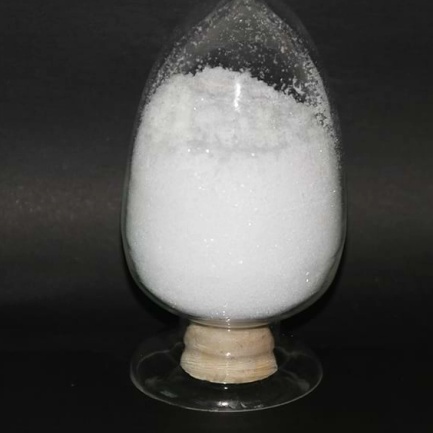
X Ray Grade Barium Sulfate: Medical Imaging-Focused Performance
Designed for gastrointestinal X-ray and CT imaging
X Ray Grade Barium Sulfate is engineered around the physiological and imaging requirements of the gastrointestinal tract. Its insolubility ensures barium ions remain chemically bound, preventing systemic absorption while maintaining strong X-ray attenuation. Particle size and density are calibrated to balance radiographic visibility with patient tolerance. In CT imaging, controlled concentration allows differentiation between bowel lumen and surrounding tissues without masking pathology. This scientific alignment between chemistry, anatomy, and imaging physics enables reproducible studies across varied patient conditions.
Optimized suspension behavior for uniform coating
Uniform suspension is achieved through precise particle size distribution and surface characteristics that counter sedimentation forces. X Ray Grade Barium Sulfate is designed to maintain stability under shear, agitation, and time-dependent conditions common in clinical workflows. Consistent suspension promotes even mucosal coating, which is essential for detecting fine structural changes such as folds or subtle lesions. From a physics perspective, stable coating ensures predictable X-ray attenuation across the field of view, improving image comparability between studies and operators.
High-purity pharmaceutical standards
Pharmaceutical-grade purity is critical because even trace soluble barium can alter safety and performance profiles. X Ray Grade Barium Sulfate is produced under tightly controlled specifications that limit impurities, control crystal form, and ensure batch-to-batch consistency. These standards support predictable rheology, radiopacity, and shelf stability. For imaging centers, high purity simplifies protocol standardization and regulatory compliance. Scientifically, controlled purity reduces variability in suspension behavior, directly supporting reliable diagnostic interpretation across repeated examinations.
MICRO Barium Sulfate: Particle Engineering for Industrial Precision
Micronized particle control for advanced materials
MICRO Barium Sulfate relies on controlled micronization to achieve narrow particle size distributions that improve interaction with polymer chains and resin systems. Smaller, uniform particles increase surface contact while avoiding excessive viscosity rise during processing. From a materials science perspective, this balance supports stable melt flow, consistent curing, and predictable mechanical behavior. Engineers use this control to fine-tune compound performance without altering base formulations, which simplifies scale-up and reduces variability across production batches.
Performance benefits in density and surface finish
The high intrinsic density of barium sulfate, combined with micronized particle geometry, allows formulators to increase mass and opacity without introducing surface defects. Even dispersion minimizes agglomeration, which directly affects gloss, smoothness, and dimensional accuracy. In coatings and molded parts, this contributes to uniform film formation and reduced micro-roughness. Scientifically, controlled filler morphology helps distribute stress evenly, supporting durability while preserving visual and tactile quality.
Role in radiation shielding materials
In radiation shielding systems, attenuation efficiency depends on both material density and particle packing. MICRO Barium Sulfate enables higher effective density through efficient particle arrangement within binders or cementitious matrices. This improves X-ray absorption per unit thickness, allowing thinner shielding structures to meet design targets. For architects and equipment designers, such efficiency supports compact layouts, consistent shielding performance, and easier installation across medical and industrial facilities.
Particle Size and Surface Behavior: The Real Technical Divider
How particle size shapes behavior
Particle size directly influences how barium sulfate behaves in use. Larger particles settle faster and interact differently with binders or liquids. Smaller particles increase surface area and improve interaction. In X Ray Grade Barium Sulfate, size supports stable suspension and coating. In MICRO Barium Sulfate, size supports dispersion and structural integration. The same principle drives different outcomes.
Suspension stability comparison
Suspension behavior is one of the clearest technical boundaries between medical and industrial barium sulfate grades. Although both can be dispersed in liquids, their particle design, surface behavior, and performance targets differ significantly, leading to very different stability profiles in real-world use.
| Technical Dimension | X Ray Grade Barium Sulfate | MICRO Barium Sulfate |
| Primary system | Aqueous suspensions for oral or rectal administration | Solid matrices or high-viscosity industrial systems |
| Typical medium | Water-based contrast suspensions | Polymers, resins, cementitious binders |
| Mean particle size range | Fine particles, commonly several microns | Micronized particles, often sub-5 μm |
| Density (BaSO₄ intrinsic) | ~4.5 g/cm³ | ~4.5 g/cm³ |
| Suspension goal | Maintain uniform distribution over clinical handling time | Not designed for long-term free suspension |
| Settling behavior | Controlled settling rate to avoid rapid sedimentation | Rapid settling in water if not stabilized |
| Surface interaction | Optimized to minimize agglomeration in liquids | Optimized for strong filler–matrix interaction |
| Use of stabilizers | Formulated with dispersants and thickeners | Stability relies on polymer wetting, not water |
| Shear response | Stable under shaking, pouring, and short dwell times | Stability improves only under high-viscosity shear |
| Performance risk if misapplied | Loss of image consistency if suspension breaks | Poor dispersion or clumping in liquid systems |
| Key evaluation metric | Visual homogeneity and imaging consistency | Dispersion uniformity and mechanical integration |
Tip:If suspension stability in water is a core requirement, material selection should prioritize grades engineered for aqueous balance rather than relying on particle fineness alone. Industrial micronization improves solid dispersion but does not replace medical-grade suspension design in imaging applications.
Why finer is not always better
Particle size influences system behavior through surface area, interparticle forces, and fluid dynamics. As particles become finer, surface area increases sharply, which can raise viscosity, intensify agglomeration tendencies, and alter flow under shear. In medical imaging, this may disrupt suspension balance and mucosal coating uniformity. In industrial formulations, excessively fine particles can increase resin demand or processing torque. From a scientific standpoint, optimal performance comes from balancing particle size with system rheology, not from minimizing size alone.
Selecting the Right Grade Based on End-Use Requirements
When X Ray Grade Barium Sulfate is the right choice
X Ray Grade Barium Sulfate is appropriate whenever human exposure, diagnostic precision, and imaging protocol consistency are critical. Its formulation aligns with medical physics requirements, including predictable X-ray attenuation and controlled rheology during administration. Clinical workflows depend on repeatable contrast behavior to support standardized interpretation across operators and equipment. Scientifically, matching particle characteristics to biological environments reduces variability caused by flow, dilution, or transit time, which directly supports accurate diagnosis and regulatory conformity.
When MICRO Barium Sulfate delivers better results
MICRO Barium Sulfate is better suited to systems governed by materials science rather than physiology. In polymers, coatings, and construction composites, its micronized structure enhances dispersion and packing efficiency. This supports stable mechanical properties, controlled density, and surface uniformity under thermal and mechanical stress. From an engineering standpoint, using an industrial-grade filler optimized for these conditions improves process robustness, simplifies formulation design, and supports repeatable large-scale manufacturing.
Decision checklist for buyers
Effective grade selection begins with defining the functional environment rather than the chemical name. Buyers should assess whether performance depends on biological interaction or material integration, whether behavior is driven by suspension stability or solid dispersion, and which standards govern acceptance. Evaluating these factors through application physics and process conditions reduces iterative testing. Scientifically informed selection accelerates qualification, lowers development risk, and aligns procurement decisions with long-term operational goals.

Market Applications and Value Optimization
Healthcare diagnostics and imaging workflows
In healthcare diagnostics, workflow efficiency depends on image consistency and procedural repeatability. X Ray Grade Barium Sulfate is formulated to deliver stable radiopacity and uniform mucosal coating, which supports standardized imaging protocols. Consistent contrast behavior helps radiologists compare studies across time and patients with greater confidence. Fewer repeat scans reduce radiation exposure, staff workload, and scheduling pressure. For imaging centers, dependable contrast performance improves throughput, supports clinical decision-making, and strengthens patient confidence in diagnostic outcomes.
Industrial and engineering sectors
In industrial markets, value comes from performance optimization. MICRO Barium Sulfate helps manufacturers fine-tune density, opacity, and durability. It integrates smoothly into production workflows. This predictability supports scalable manufacturing and long-term product quality.
| Aspect | Role of MICRO Barium Sulfate | Value for Industrial and Engineering Sectors |
| Performance focus | Enables precise control of material properties | Supports consistent and optimized product performance |
| Density tuning | Increases and stabilizes material density | Helps meet structural and weight specifications |
| Opacity control | Enhances opacity without disrupting formulation | Improves visual uniformity and inspection results |
| Durability support | Reinforces mechanical and surface properties | Extends product lifespan in demanding applications |
| Process integration | Disperses smoothly in existing workflows | Reduces process adjustments and production risk |
| Manufacturing scalability | Maintains predictable behavior at scale | Facilitates large-volume, long-term manufacturing |
| Quality consistency | Delivers repeatable formulation outcomes | Ensures stable quality across production batches |
How correct grade selection lowers total cost
Correct grade selection lowers total cost by aligning material behavior with process physics and end-use requirements. When particle size, purity level, and dispersion characteristics match the system, mixing energy decreases and processing windows widen. This reduces cycle time, scrap rates, and quality deviations. In regulated environments, using the proper grade also minimizes compliance risks and requalification costs. Over time, stable formulations reduce maintenance, simplify supply management, and support consistent output, delivering measurable savings beyond raw material pricing.
Conclusion
X Ray Grade Barium Sulfate and MICRO Barium Sulfate serve different purposes, not different quality levels. One supports safe, consistent medical imaging, while the other enhances industrial materials through controlled dispersion and density. Understanding particle design, application context, and standards enables better decisions. Qingdao Red Butterfly Precision Materials Co., Ltd. delivers both grades with stable quality and application-focused performance, helping customers improve imaging accuracy, manufacturing efficiency, and long-term value.
FAQ
Q: What is X Ray Grade Barium Sulfate used for?
A: X Ray Grade Barium Sulfate is used in medical imaging as a contrast agent for gastrointestinal X-ray and CT exams.
Q: How does X Ray Grade Barium Sulfate differ from MICRO Barium Sulfate?
A: X Ray Grade Barium Sulfate focuses on suspension stability and safety, while MICRO grades optimize dispersion in industrial materials.
Q: Why can’t MICRO Barium Sulfate replace X Ray Grade Barium Sulfate?
A: X Ray Grade Barium Sulfate meets pharmaceutical standards required for patient safety and diagnostic consistency.
Q: Is X Ray Grade Barium Sulfate more expensive?
A: X Ray Grade Barium Sulfate may cost more due to purity control and regulatory compliance.
Q: What problems occur if the wrong grade is used?
A: Using X Ray Grade Barium Sulfate incorrectly can cause inefficiency, while misuse of MICRO grades affects imaging quality.

 English
  العربية
  Français
  Русский
  Español
  Português
  Deutsch
  italiano
  日本語
日本語  한국어
한국어  Nederlands
  Tiếng Việt
  ไทย
ไทย  Polski
  Türkçe
  አማርኛ
አማርኛ  ພາສາລາວ
  ភាសាខ្មែរ
  Bahasa Melayu
  ဗမာစာ
ဗမာစာ  தமிழ்
தமிழ்  Filipino
  Bahasa Indonesia
  magyar
  Română
  Čeština
  Монгол
  қазақ
қазақ  Српски
  हिन्दी
  فارسی
فارسی  Kiswahili
  Slovenčina
  Slovenščina
  Norsk
Norsk  Svenska
  українська
  Ελληνικά
  Suomi
Suomi  Հայերեն
  עברית
עברית  Latine
  Dansk
Dansk  اردو
اردو  Shqip
Shqip  বাংলা
বাংলা  Hrvatski
  Afrikaans
  Gaeilge
  Eesti keel
  Māori
Māori 


