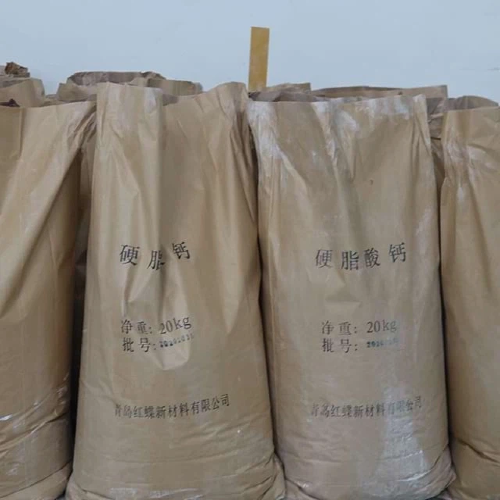
What is Calcium Stearate?
Calcium Stearate is a widely used white, waxy powder that belongs to the class of metallic stearates. It is formed by the reaction of stearic acid with calcium salts and is renowned for its versatile lubricating, stabilizing, and anti-caking properties. Over the years, Calcium Stearate has become an essential additive in industries ranging from plastics and rubber to food, cosmetics, and construction materials.
Chemically, Calcium Stearate is non-toxic, hydrophobic, and thermally stable, which allows it to perform effectively under high-temperature and moisture conditions without losing its properties. Its hydrophobic nature ensures that it repels water effectively, preventing caking and moisture absorption in powders and other processed materials. This characteristic is particularly important in industries where product stability and shelf life are critical.
The compound also exhibits excellent chemical resistance, making it stable in contact with most solvents, acids, and alkalis. Its unique combination of thermal, chemical, and mechanical properties has made Calcium Stearate a cornerstone in manufacturing processes, enhancing product performance, process efficiency, and longevity.
In this comprehensive guide, we will explore the chemical and physical properties, production methods, applications, benefits, handling, grades, selection tips, and frequently asked questions related to Calcium Stearate, providing a thorough understanding of its importance in modern manufacturing.
Chemical and Physical Properties of Calcium Stearate
Chemical Properties
Calcium Stearate is a metallic salt of stearic acid, exhibiting several distinct chemical characteristics:
Chemical formula: C36H70CaO4
Molecular weight: 622.94 g/mol
pH (1% aqueous dispersion): 9–10
Solubility: Insoluble in water but soluble in hot ethanol, acetone, and certain non-polar solvents
Structure: Comprised of long-chain fatty acids bonded to calcium ions, providing hydrophobic properties and thermal resistance
Calcium Stearate can also interact with other additives to improve dispersion and compatibility in complex mixtures. Its metallic cation, calcium, provides stability and enhances its role as a lubricant and anti-caking agent. This makes it more effective in polymer and rubber processing compared to some other metallic stearates.
Physical Properties
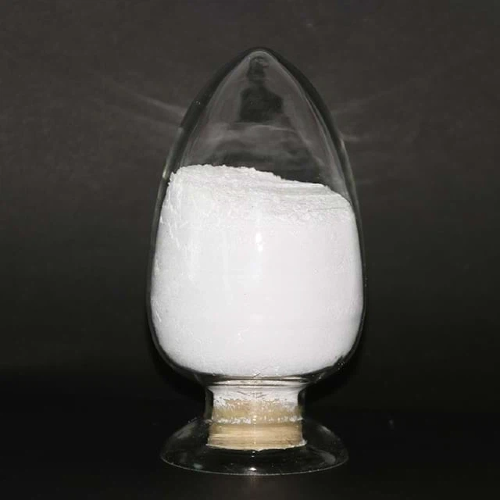
Appearance: White, waxy powder or granular material
Melting point: 158–165°C, making it stable under standard processing temperatures
Density: 1.0 g/cm³
Thermal stability: Resistant to oxidation and decomposition under normal conditions, which ensures long-term storage stability
Comparison with Other Metallic Stearates:
Property | Calcium Stearate | Magnesium Stearate | Zinc Stearate |
Solubility in Water | Insoluble | Insoluble | Insoluble |
Lubrication Efficiency | High | Medium | Medium |
Thermal Stability | Good | Moderate | High |
Applications | Plastics, Rubber, Cosmetics | Tablets, Lubricants | Rubber, Paints |
The comparison highlights that Calcium Stearate provides a balanced combination of thermal stability, lubricating efficiency, and wide applicability, which is why it is widely preferred in various industrial processes.
Production Process of Calcium Stearate
Calcium Stearate can be manufactured using two main industrial methods: the dry method and the wet (soap) method. Each method has advantages and affects the final product’s purity, particle size, and performance characteristics.
1. Dry Method
Process: Stearic acid reacts directly with calcium oxide or hydroxide at elevated temperatures, producing Calcium Stearate in powdered or granular form.
Advantages: Produces high-purity and uniform particle size material. The dry method also allows precise control over the particle morphology, which is important for consistent performance in plastics and rubber.
Applications: Widely used in plastics, rubber, and coatings, where uniform dispersion is critical.
2. Wet (Soap) Method
Process: Calcium salts are mixed with fatty acids in water to form a slurry. The precipitate is filtered, washed, and dried to obtain Calcium Stearate.
Advantages: Requires lower energy consumption, is easy to scale, and provides consistent quality. Wet processing can produce smaller particle sizes, which are often desirable in certain applications such as construction powders and cosmetic powders.
Applications: Commonly used in construction materials and personal care products.
3. Factors Affecting Quality
Several factors determine the final quality and performance of Calcium Stearate:
Purity of raw materials: Impurities in stearic acid or calcium salts can affect lubricating and stabilizing properties.
Particle size and morphology: Finer particles improve dispersion and surface coverage in polymers and powders.
Reaction temperature and time: Precise control ensures complete reaction and optimal crystal formation.
Post-processing: Drying and milling techniques impact flow properties and anti-caking efficiency.
Proper control over these parameters ensures a high-quality, stable, and functional product suitable for diverse industrial applications.
Applications of Calcium Stearate
Calcium Stearate is a multi-functional additive that enhances processing, stability, and performance across numerous industries. Its main functions include lubrication, anti-caking, moisture resistance, and thermal stabilization.
1. Plastics and Polymers
Acts as a lubricant to improve melt flow and reduce friction during extrusion and molding processes.
Prevents sticking of plastic to machinery, reducing downtime and production defects.
Enhances surface finish and texture uniformity of the final products.
Widely used in PVC, polyethylene, polypropylene, and other synthetic polymers, ensuring smooth processing and consistent performance.
2. Rubber Industry
Improves the processability of rubber compounds during mixing and extrusion.
Reduces friction and heat buildup during mechanical processing, which minimizes wear and tear on machinery.
Enhances elasticity, surface smoothness, and durability of rubber products.
Supports the performance of tires, seals, gaskets, and other rubber-based items by maintaining dimensional stability.
3. Construction Materials
Functions as a water repellent in cement, gypsum, plaster, and other construction powders.
Prevents caking and clumping in powdered construction materials, enhancing flowability.
Improves workability and long-term stability, reducing handling difficulties and ensuring consistent performance in construction applications.
4. Cosmetics and Personal Care
Acts as a flow agent, stabilizer, and anti-caking additive in cosmetic powders, creams, and deodorants.
Helps maintain smooth texture and prevents ingredients from aggregating, which is critical for product performance and appearance.
Ensures uniform particle distribution, improving overall product quality.
5. Food Industry
Serves as an anti-caking agent in powdered foods such as salt, spices, and powdered milk.
Ensures free-flowing properties, enhancing storage stability and usability.
Food-grade Calcium Stearate must comply with FDA and other regulatory standards, ensuring safety for human consumption.
6. Other Industrial Uses
Utilized in coatings, inks, and waxes as a dispersant or stabilizer.
Functions as a lubricant in metalworking, packaging, and other industrial processes, enhancing efficiency.
Helps maintain consistent flow and mixing characteristics in powders, resins, and other granular materials.
Table: Applications of Calcium Stearate
Industry | Function | Example Products |
Plastics & Polymers | Lubricant, anti-stick, processing aid | PVC pipes, sheets, films |
Rubber | Processing aid, elasticity enhancer | Tires, gaskets, seals |
Construction Materials | Water repellent, anti-caking | Cement, gypsum, plaster |
Cosmetics & Personal Care | Flow agent, stabilizer | Talc, face powder, deodorant |
Food | Anti-caking agent | Salt, powdered milk, spices |
Others | Lubricant, dispersant | Paints, coatings, inks |
Benefits of Using Calcium Stearate
Using Calcium Stearate in manufacturing offers numerous advantages:
Improved Processing: Reduces friction during extrusion, molding, and mixing, leading to more efficient production.
Enhanced Product Quality: Provides smooth surfaces, uniform textures, and consistent mechanical properties.
Thermal and Moisture Stability: Protects powders, plastics, and rubbers from moisture absorption, degradation, and caking.
Non-Toxic and Safe: Suitable for food-grade and cosmetic-grade applications, meeting regulatory requirements.
Cost-Effective: Reduces wear on machinery, lowers downtime, and minimizes defects, thereby decreasing overall production costs.
Versatile Performance: Effective across a range of temperatures and industrial processes, making it an all-around additive for multiple applications.
Handling and Storage of Calcium Stearate
Proper handling and storage are crucial to maintain quality, safety, and effectiveness:
Handling Guidelines
Wear gloves, masks, and protective eyewear to avoid inhalation of fine powders.
Minimize dust generation during transfer and processing.
Avoid contact with strong oxidizing agents or incompatible chemicals.
Maintain a clean working environment to prevent contamination of the product.
Storage Guidelines
Store in dry, cool, and well-ventilated areas to prevent moisture uptake.
Use airtight containers or sealed bags to maintain product integrity.
Typical shelf life is 2–3 years if stored under proper conditions.
Protect from direct sunlight and high humidity, which may reduce effectiveness over time.
Common Grades and Specifications
Calcium Stearate is available in different grades to suit various industrial and regulatory requirements:
Grade | Purity (%) | Particle Size (μm) | Applications |
Industrial Grade | 90–95 | 1–10 | Plastics, rubber, construction |
Food Grade | 98+ | <5 | Salt, powdered milk, spices |
Pharmaceutical Grade | 99+ | <2 | Tablets, capsules, cosmetics |
The choice of grade directly impacts the performance, safety, and compliance of the final product. For industrial applications, particle size and purity are crucial, while in food and pharmaceuticals, adherence to regulatory standards is critical.
Choosing the Right Calcium Stearate
When selecting Calcium Stearate, manufacturers should consider:
Industry Requirements: Food-grade for consumables, industrial-grade for plastics/rubber.
Processing Conditions: Temperature, machinery type, moisture sensitivity, and compatibility with other additives.
Desired Properties: Lubrication, anti-caking, water repellency, or flow improvement.
Regulatory Standards: Compliance with FDA, ISO, or local regulations ensures safety and legal conformity.
Selecting the appropriate grade and specification ensures maximum efficiency, cost-effectiveness, and product quality, reducing waste and improving overall manufacturing performance.
Conclusion
Calcium Stearate is a highly versatile and essential additive widely used across multiple industries due to its excellent lubrication, thermal stability, moisture resistance, and safety. By improving processability, product quality, and long-term stability, it enables manufacturers to achieve efficient, reliable, and high-performance production. Its compatibility with a broad range of materials—including plastics, rubber, powders, cosmetics, and food products—makes it a practical solution for diverse industrial applications.
For businesses looking to source high-quality Calcium Stearate or seeking expert guidance on selecting the right grade for specific applications, Qingdao Red Butterfly Precision Materials Co., Ltd. is a trusted partner. With years of experience in chemical additives and a commitment to quality, the company provides reliable products, technical support, and tailored solutions to meet the demands of modern manufacturing.
To learn more about their Calcium Stearate products or discuss your unique requirements, interested readers are encouraged to reach out directly to Qingdao Red Butterfly Precision Materials Co., Ltd. Partnering with them ensures access to premium materials, industry expertise, and solutions that enhance production efficiency and product performance.
FAQ about Calcium Stearate
Q1: What is the main function of calcium stearate?
A1: It acts as a lubricant, anti-caking agent, stabilizer, and water repellent, improving processability and product stability.
Q2: Is calcium stearate safe for food and cosmetics?
A2: Yes, food-grade and cosmetic-grade Calcium Stearate meet regulatory safety standards for human consumption.
Q3: How should calcium stearate be stored to maintain its quality?
A3: Store in dry, cool, ventilated areas, away from moisture and strong oxidizers, in airtight containers.
Q4: Can calcium stearate improve plastic processing?
A4: Absolutely. It reduces friction, prevents sticking, and enhances surface finish, making processing more efficient.
Q5: What is the difference between industrial and food-grade calcium stearate?
A5: Industrial grade is typically 90–95% pure and used for plastics, rubber, and construction, while food-grade is 98%+ pure, complying with FDA and ISO standards.

 English
  العربية
  Français
  Русский
  Español
  Português
  Deutsch
  italiano
  日本語
日本語  한국어
한국어  Nederlands
  Tiếng Việt
  ไทย
ไทย  Polski
  Türkçe
  አማርኛ
አማርኛ  ພາສາລາວ
  ភាសាខ្មែរ
  Bahasa Melayu
  ဗမာစာ
ဗမာစာ  தமிழ்
தமிழ்  Filipino
  Bahasa Indonesia
  magyar
  Română
  Čeština
  Монгол
  қазақ
қазақ  Српски
  हिन्दी
  فارسی
فارسی  Kiswahili
  Slovenčina
  Slovenščina
  Norsk
Norsk  Svenska
  українська
  Ελληνικά
  Suomi
Suomi  Հայերեն
  עברית
עברית  Latine
  Dansk
Dansk  اردو
اردو  Shqip
Shqip  বাংলা
বাংলা  Hrvatski
  Afrikaans
  Gaeilge
  Eesti keel
  Māori
Māori 


