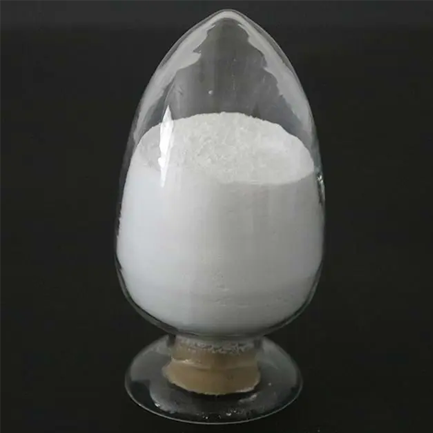
Barium sulfate (BaSO₄) is a white, odorless inorganic compound that plays an essential role across multiple industries. Known for its exceptional chemical stability, high purity, and insolubility in water, it has become a core ingredient in fields ranging from plastics and coatings to medicine and electronics. Chemically, it consists of barium (Ba⊃2;⁺) and sulfate (SO₄⊃2;⁻) ions, forming a dense, crystalline powder that does not react easily with most other substances.
Unlike many other barium compounds that are toxic or soluble, barium sulfate is non-toxic and insoluble, making it one of the safest and most versatile barium salts for both industrial and medical purposes. Its unique combination of density, whiteness, and inertness makes it valuable for improving product performance and appearance in a wide variety of materials. Understanding what barium sulfate does helps manufacturers, researchers, and medical professionals use it more effectively and safely in their respective applications.
Physical and Chemical Properties of Barium Sulfate
The effectiveness of barium sulfate stems from its exceptional physical and chemical properties:
Chemical Stability: BaSO₄ is inert and resistant to most acids and bases under normal conditions. Its chemical stability prevents unwanted reactions with other components in plastics, paints, or medical formulations.
High Purity: Industrial and medical applications often require purity levels exceeding 97–99%, which ensures consistent performance, prevents contamination, and meets strict regulatory standards.
Insolubility: Being practically insoluble in water and organic solvents, barium sulfate does not leach into the environment or biological systems, enhancing its safety profile.
Optical Properties: Its low refractive index and high whiteness make it ideal for applications where surface gloss, brightness, and light reflection are critical.
Particle Size and Surface Modification: Ultrafine and surface-treated barium sulfate particles improve compatibility with polymers and coatings, ensuring uniform dispersion, smooth finishes, and better mechanical properties.
Advanced grades of barium sulfate, such as surface-modified, ultrafine, or X-ray-grade, are specifically designed for high-performance plastics, coatings, medical imaging, and radiation shielding. These grades can be engineered to enhance mechanical strength, thermal stability, and chemical resistance while providing superior visual effects in coatings and plastics.
Industrial Applications and Functions of Barium Sulfate
Barium sulfate is an exceptionally versatile inorganic compound whose unique physical and chemical properties make it indispensable across a wide array of industrial sectors. Its applications span from polymers and plastics to paints, coatings, rubber, electronics, glass, and ceramics, where it serves as a functional additive that enhances strength, durability, appearance, and overall product performance. Understanding the multifaceted roles of barium sulfate helps manufacturers and engineers optimize product quality and achieve superior performance in their applications.
Plastics
In the plastics industry, barium sulfate is widely recognized as a high-performance functional filler. It plays a critical role in enhancing both the mechanical and aesthetic properties of polymer-based products. By integrating barium sulfate into plastic resins, manufacturers can significantly improve:
Hardness and stiffness: BaSO₄ increases the structural rigidity of plastics without compromising flexibility, making it suitable for high-strength components.
Wear and abrasion resistance: It protects products from mechanical wear, extending the lifespan of items exposed to friction or heavy usage.
Processing stability: Its incorporation facilitates smoother molding, extrusion, and thermoforming, reducing defects such as warping or shrinkage during manufacturing.
Dimensional stability: The addition of barium sulfate ensures that molded parts retain their intended shape and size over time.
Beyond mechanical improvements, barium sulfate contributes significantly to the visual quality of plastics. Its high whiteness and uniform light dispersion give plastic surfaces a smooth, glossy, and high-end finish, making it ideal for household containers, decorative polymer products, plastic pipes, and automotive parts. Additionally, its high specific gravity adds weight and stability to components such as soundproof panels or vibration-dampening elements, which is especially valuable in automotive or industrial applications.
Coatings and Paints
The coatings and paints industry benefits greatly from the inclusion of barium sulfate due to its unique optical and rheological properties. BaSO₄ enhances:
Viscosity and flow control: Ensures that coatings spread evenly during application, preventing streaks, sags, or uneven coverage.
Adhesion and coverage: Improves the bonding of coatings to various substrates, providing consistent and durable finishes.
Surface smoothness and gloss: Contributes to a high-quality visual appearance, essential for automotive and decorative coatings.
Weather and UV resistance: Its chemical inertness protects coatings from degradation due to sunlight, heat, or moisture.
In automotive paints, barium sulfate allows manufacturers to achieve a premium glossy finish while maintaining the durability of the coating. Architectural coatings also benefit, as BaSO₄ improves weather resistance and color retention over long-term outdoor exposure. In powder coatings, barium sulfate enhances electrostatic behavior, ensuring even distribution of powder particles and improving overall texture and coverage.
Rubber
In rubber manufacturing, barium sulfate functions as a reinforcing agent, improving the mechanical properties, durability, and aging resistance of elastomeric products. Its finely divided particles ensure uniform dispersion throughout the rubber matrix, enhancing:
Abrasion resistance: Reduces wear and tear in high-friction applications.
Elasticity and flexibility: Maintains resilience and shape retention in tires, seals, and gaskets.
Aging and heat stability: Protects against oxidative degradation, UV damage, and thermal stress.
Common applications include automotive tires, industrial hoses, rubber seals, and gaskets, where enhanced dimensional stability, strength, and longevity are critical. Its non-reactive nature also minimizes unwanted chemical interactions, further increasing the reliability of rubber products in demanding environments.
Inks and Electronics
Barium sulfate is increasingly important in the printing and electronics sectors, where its properties contribute to opacity, brightness, and precision.
In printing inks, BaSO₄ ensures sharp, consistent color by improving pigment dispersion and surface smoothness. This leads to higher-quality prints with vibrant colors and superior coverage.
In electronic inks and dielectric materials, barium sulfate provides excellent insulating properties and thermal stability, which are essential for high-precision applications such as printed circuit boards (PCBs), sensors, and flexible electronics.
Its fine particle size enables accurate and uniform deposition in electronic circuits, ensuring high-resolution printing and stable electrical performance.
By enhancing both the visual and functional qualities of inks and electronic materials, barium sulfate has become a critical additive in high-tech industries.
Glass, Ceramics, and Friction Materials
In specialty glass and ceramics, barium sulfate improves optical clarity, density, and chemical resistance. It ensures:
Enhanced transparency and light refraction: Beneficial for optical glass and lenses.
Surface smoothness and uniformity: Reduces defects during the sintering process of ceramics.
Chemical durability: Increases resistance to acids and environmental degradation.
In friction materials such as brake pads, clutch linings, and industrial friction components, barium sulfate adjusts the friction coefficient and stabilizes performance under varying temperature and pressure conditions. This results in:
Smoother and more reliable braking performance.
Reduced noise and vibration during operation.
Prolonged lifespan of friction materials, enhancing overall safety and efficiency.
Medical and Pharmaceutical Uses
Barium sulfate is widely known for its medical applications, particularly as an X-ray contrast agent for gastrointestinal imaging. Its high atomic number and radiopacity allow it to effectively absorb X-rays, producing clear and detailed images of the stomach, intestines, and esophagus.
Key benefits include:
Safety: Insoluble barium sulfate passes through the digestive system without being absorbed into the bloodstream.
Imaging clarity: Provides sharp contrast for accurate diagnostics of GI tract conditions.
Radiation shielding: Also incorporated into protective equipment and medical devices to reduce exposure during imaging procedures.
Medical-grade barium sulfate is carefully processed to meet strict purity and particle size standards, ensuring safe use in diagnostic procedures while maintaining effectiveness.
Specialty Applications
Beyond traditional industrial and medical uses, specialty grades of barium sulfate serve advanced applications in high-performance materials:
Ultrafine and surface-modified BaSO₄ improves mechanical strength, surface gloss, and durability in plastics, coatings, and inks.
Radiation shielding: Its high density and chemical stability make it suitable for medical, industrial, and nuclear radiation protection, such as in protective panels, walls, and garments.
Precision materials: Enhances hardness, smoothness, and structural integrity of advanced composites and high-end engineering plastics.
These applications illustrate barium sulfate’s adaptability, enabling manufacturers to design products that meet high-performance standards and regulatory requirements.
Advantages of Using Barium Sulfate
The widespread adoption of barium sulfate across industries is due to its numerous advantages:
High Purity: Guarantees consistent physical and chemical performance.
Chemical Inertness: Prevents unwanted reactions, maintaining product stability and extending shelf life.
Safety: Non-toxic and environmentally friendly compared to other barium salts.
Versatility: Effective in plastics, paints, coatings, rubber, electronics, medical imaging, and specialty materials.
Customizability: Available in various grades, particle sizes, and surface treatments to meet specific industrial and medical requirements.
By enhancing mechanical properties, aesthetic appeal, and safety, barium sulfate functions as both a performance enhancer and a protective stabilizer, ensuring long-term benefits for product quality.
Frequently Asked Questions (FAQ)
Q1: What does barium sulfate do in plastics?
It acts as a filler that increases hardness, gloss, and durability. It also enhances dimensional stability and improves the visual appearance of plastic surfaces.
Q2: Is barium sulfate safe for medical use?
Yes. Medical-grade barium sulfate is non-toxic and insoluble, making it safe for use in X-ray imaging. It passes through the body without being absorbed.
Q3: Can it improve paint and coating performance?
Absolutely. Barium sulfate enhances gloss, color stability, and UV resistance, while improving flow and surface uniformity in coatings and paints.
Q4: How does particle size affect its function?
Finer particle sizes improve dispersion, transparency, and surface smoothness, while larger particles offer better reinforcement and opacity.
Q5: Can barium sulfate be customized for specific applications?
Yes. Manufacturers can produce high-purity, surface-treated, or ultrafine grades tailored to the requirements of different industries.
Conclusion
Barium sulfate is a highly versatile and reliable material that plays a vital role in a wide range of industries. From improving the strength and finish of plastics and coatings to serving as a safe medical imaging agent, its unique combination of stability, purity, and safety makes it indispensable.
Whether used in industrial production, laboratory research, or healthcare, understanding what barium sulfate does allows users to apply it more effectively and responsibly. For companies seeking high-quality, high-purity barium sulfate, partnering with reputable suppliers such as Qingdao Red Butterfly Precision Materials Co., Ltd. ensures superior product performance and consistent quality across all applications.

 English
  العربية
  Français
  Русский
  Español
  Português
  Deutsch
  italiano
  日本語
日本語  한국어
한국어  Nederlands
  Tiếng Việt
  ไทย
ไทย  Polski
  Türkçe
  አማርኛ
አማርኛ  ພາສາລາວ
  ភាសាខ្មែរ
  Bahasa Melayu
  ဗမာစာ
ဗမာစာ  தமிழ்
தமிழ்  Filipino
  Bahasa Indonesia
  magyar
  Română
  Čeština
  Монгол
  қазақ
қазақ  Српски
  हिन्दी
  فارسی
فارسی  Kiswahili
  Slovenčina
  Slovenščina
  Norsk
Norsk  Svenska
  українська
  Ελληνικά
  Suomi
Suomi  Հայերեն
  עברית
עברית  Latine
  Dansk
Dansk  اردو
اردو  Shqip
Shqip  বাংলা
বাংলা  Hrvatski
  Afrikaans
  Gaeilge
  Eesti keel
  Māori
Māori 


