Introduction
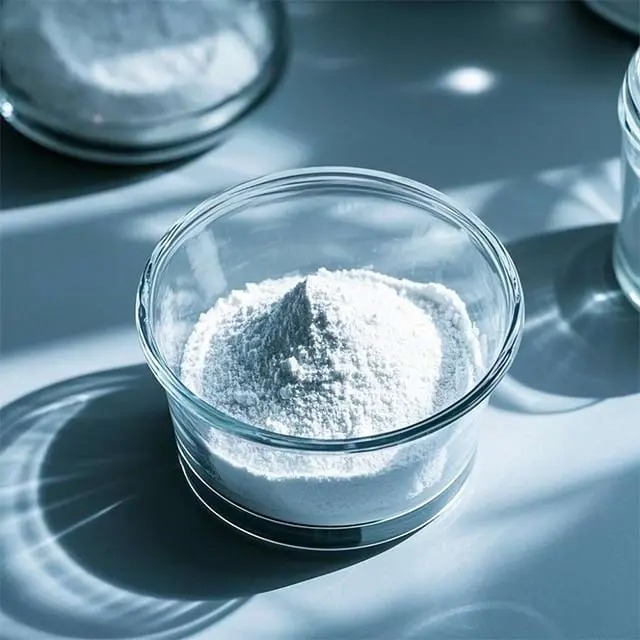
Barium Sulfate is a highly valuable inorganic compound widely used in industries such as medical imaging, coatings, plastics, rubber, and drilling fluids. Its production is a critical process that ensures high levels of purity, consistency, and performance. Understanding how Barium Sulfate is made not only reveals the science behind its formation but also explains why its specific characteristics—such as whiteness, chemical inertness, and density—make it indispensable across so many fields. This article provides a detailed exploration of the complete production pathway, from natural raw material extraction to industrial-scale refinement and quality control, while also highlighting the applications that rely on its precise manufacturing.
Mining and Preparation of Barite Ore
The journey of Barium Sulfate begins with barite ore (BaSO₄), its naturally occurring mineral form. Barite is mined from deposits that are often found in sedimentary rocks or hydrothermal veins. The ore typically contains impurities such as silica, iron oxide, and alumina, which must be separated before further processing. Mining methods vary from open-pit to underground mining depending on the deposit size and depth.
Once extracted, the ore undergoes crushing and grinding into smaller particles. This stage is crucial for increasing surface area and facilitating subsequent purification steps. Industrial processors often use washing, gravity separation, and flotation to remove impurities. The goal is to obtain a concentrated form of barite that has minimal contamination and the desired particle size distribution suitable for chemical or physical processing.
Chemical Synthesis of Barium Sulfate
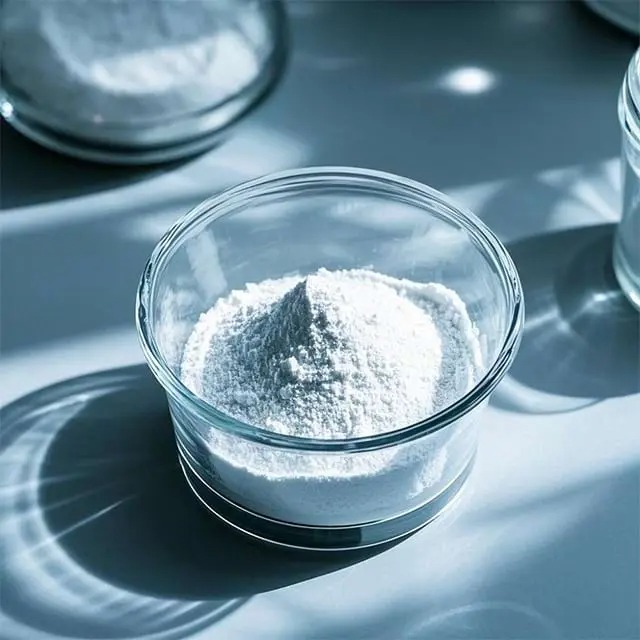
Although barite itself is Barium Sulfate in natural form, industrial processes often aim to produce synthetic Barium Sulfate with higher purity and better particle uniformity. This is typically achieved through precipitation reactions. The most common pathway involves reacting soluble barium salts, such as barium chloride (BaCl₂), with a source of sulfate ions, often sodium sulfate (Na₂SO₄).
Reaction equation:
BaCl₂ (aq) + Na₂SO₄ (aq) → BaSO₄ (s) + 2NaCl (aq)
The reaction produces fine Barium Sulfate particles, which are separated from the liquid medium through filtration. Careful control of temperature, concentration, and reaction speed allows manufacturers to tailor particle size, surface area, and whiteness. Compared to natural barite, synthetic Barium Sulfate demonstrates superior brightness and uniformity, making it ideal for applications such as high-performance paints and coatings.
Physical Processing and Refinement
After synthesis or ore concentration, Barium Sulfate undergoes multiple refinement steps to enhance quality. The primary methods include:
Washing and Filtration: Removes residual salts and impurities from the precipitated product.
Drying: Ensures the removal of moisture to produce a stable, free-flowing powder.
Milling and Classification: Adjusts particle size to meet industry-specific requirements, from microfine grades to coarser fillers.
Surface Treatment: In some cases, the particles are coated with organic agents to improve dispersibility in polymers, paints, or resins.
| Processing Step | Purpose | Outcome |
| Washing & Filtration | Remove residual salts/impurities | Higher chemical purity |
| Drying | Eliminate moisture | Free-flowing, stable powder |
| Milling & Classification | Adjust particle size distribution | Application-specific performance |
| Surface Treatment | Enhance compatibility with host materials | Improved dispersion and durability |
This phase is critical because it directly determines whether the Barium Sulfate will perform adequately in specialized industries.
Quality Control and Purity Standards
Consistency is vital when producing Barium Sulfate. Industries such as medical imaging, where Barium Sulfate serves as a radiopaque contrast medium, demand products with exceptionally high purity and controlled particle size. Manufacturers employ advanced quality control methods, including:
X-ray diffraction (XRD): Confirms crystalline structure.
Scanning electron microscopy (SEM): Analyzes particle shape and surface texture.
Chemical assays: Ensure minimal levels of iron, silica, or other contaminants.
Brightness and whiteness tests: Essential for pigments and coatings.
| Parameter Checked | Significance | Target in High-Purity BaSO₄ |
| Particle Size | Impacts opacity, gloss, and flow behavior | Narrow, application-specific distribution |
| Whiteness Index | Affects paint and coating brightness | ≥ 95% |
| Soluble Salt Content | Prevents defects in plastics or paints | Minimal trace levels |
Through these protocols, manufacturers deliver Barium Sulfate that meets international standards for industries ranging from healthcare to energy.
Industrial Applications Driving Production Standards
The process of making Barium Sulfate is directly linked to its end uses, as each sector requires specific product characteristics.
Medical Imaging: Ultra-pure Barium Sulfate suspensions are used in X-ray imaging of the gastrointestinal tract.
Paints and Coatings: Fine-particle BaSO₄ enhances brightness, improves resistance, and replaces more expensive pigments.
Plastics and Rubber: Acts as a filler that improves durability, impact resistance, and gloss.
Oil and Gas Drilling: High-density barite prevents blowouts by stabilizing well pressure in drilling fluids.
The diversity of applications means production must be flexible yet precise, balancing cost-effectiveness with high technical standards.
Comparison of Natural vs. Synthetic Barium Sulfate
Both natural barite-derived and synthetic Barium Sulfate serve industrial needs, but their performance varies.
| Aspect | Natural Barite-Based BaSO₄ | Synthetic Precipitated BaSO₄ |
| Purity | Moderate, depends on ore quality | Very high, controlled in lab |
| Particle Size | Irregular, requires milling | Uniform, adjustable during reaction |
| Brightness | Adequate but less than synthetic | Superior, ideal for coatings |
| Cost | Generally lower | Higher due to processing complexity |
| Key Applications | Drilling mud, general fillers | Paints, plastics, medical-grade products |
This distinction highlights why industries choose one type over the other depending on their performance requirements.

Environmental and Safety Considerations in Production
Manufacturing Barium Sulfate requires adherence to environmental and safety protocols. Wastewater from precipitation reactions contains soluble salts that must be treated before disposal. Dust control measures are crucial in milling and drying operations to protect workers. Moreover, sustainable practices are emerging, such as recycling barite tailings or improving energy efficiency during processing. Although Barium Sulfate itself is chemically inert and non-toxic, responsible production minimizes ecological footprint and ensures workplace safety.
Conclusion
The production of Barium Sulfate is a multi-step process that combines natural resource extraction, chemical synthesis, and precise refinement. From barite mining to synthetic precipitation, each stage is designed to achieve the high purity and tailored particle characteristics that different industries demand. By understanding how Barium Sulfate is made, businesses and professionals can appreciate why its properties remain unmatched in fields as diverse as medical imaging, paints, plastics, and drilling operations. The balance between natural and synthetic production ensures that this essential compound continues to support both traditional and advanced applications.
FAQ
1: Why is synthetic Barium Sulfate preferred in medical and coating industries?
Synthetic Barium Sulfate offers higher purity and more uniform particle size compared to natural barite, which is critical for medical safety and achieving superior brightness in coatings.
2: Is Barium Sulfate safe for human use?
Yes, in its purified form, Barium Sulfate is chemically inert and insoluble in water, making it safe for use as a radiopaque agent in medical imaging.
3: Can Barium Sulfate be recycled?
While direct recycling is uncommon, barite tailings and industrial byproducts can sometimes be reprocessed into usable Barium Sulfate through advanced purification methods.
4: How does particle size affect Barium Sulfate performance?
Smaller, uniform particles provide better opacity, gloss, and dispersion, which is especially valuable in paints, plastics, and high-precision applications.
5: What is the main difference between natural and synthetic Barium Sulfate?
Natural Barium Sulfate is mined as barite ore and refined, whereas synthetic Barium Sulfate is produced via precipitation reactions, allowing tighter control over purity and particle characteristics.

 English
  العربية
  Français
  Русский
  Español
  Português
  Deutsch
  italiano
  日本語
日本語  한국어
한국어  Nederlands
  Tiếng Việt
  ไทย
ไทย  Polski
  Türkçe
  አማርኛ
አማርኛ  ພາສາລາວ
  ភាសាខ្មែរ
  Bahasa Melayu
  ဗမာစာ
ဗမာစာ  தமிழ்
தமிழ்  Filipino
  Bahasa Indonesia
  magyar
  Română
  Čeština
  Монгол
  қазақ
қазақ  Српски
  हिन्दी
  فارسی
فارسی  Kiswahili
  Slovenčina
  Slovenščina
  Norsk
Norsk  Svenska
  українська
  Ελληνικά
  Suomi
Suomi  Հայերեն
  עברית
עברית  Latine
  Dansk
Dansk  اردو
اردو  Shqip
Shqip  বাংলা
বাংলা  Hrvatski
  Afrikaans
  Gaeilge
  Eesti keel
  Māori
Māori 


