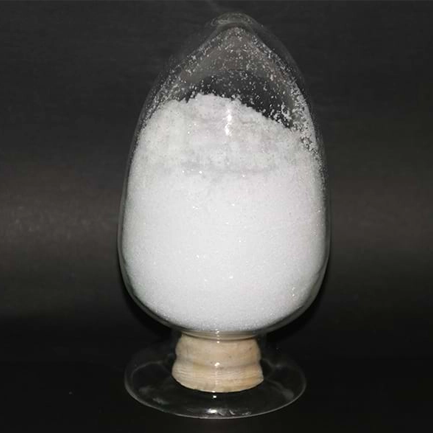
Barium nitrate, with the chemical formula Ba(NO₃)₂, is a widely used inorganic compound in industrial, laboratory, and pyrotechnic applications. Known for its strong oxidizing properties, high solubility in water, and characteristic ability to produce green flames in fireworks, barium nitrate is a compound of significant chemical interest. Among its many properties, its behavior under ultraviolet (UV) light is particularly noteworthy. Understanding the interaction between barium nitrate and UV light is essential for safe handling, proper storage, and optimized industrial and laboratory usage.
UV light, a form of electromagnetic radiation with wavelengths shorter than visible light, possesses enough energy to excite electrons and trigger chemical reactions. In the case of barium nitrate, exposure to UV light can lead to photochemical reactions that may influence its stability, reactivity, and overall performance in various applications.
Chemical Properties of Barium Nitrate Relevant to UV Light
Barium nitrate’s strong oxidizing nature is one of its most critical chemical properties. As an oxidizer, it can readily release oxygen during decomposition, supporting combustion reactions and potentially accelerating chemical processes. This property also makes it highly reactive when exposed to energy sources such as UV light, heat, or friction.
Structurally, barium nitrate consists of barium cations (Ba⊃2;⁺) and nitrate anions (NO₃⁻) arranged in a crystalline lattice. The nitrate ions are particularly sensitive to high-energy photons because their molecular bonds can absorb energy and undergo photolytic cleavage. UV light provides such energy, potentially initiating reactions that are not observed under ambient conditions or during thermal decomposition alone.
It is important to distinguish thermal stability from photochemical stability. While barium nitrate remains stable under normal temperature conditions, exposure to UV light can provide localized energy sufficient to break chemical bonds. This energy input can trigger decomposition or formation of reactive species without the need for heating, making UV light a unique factor in the chemical behavior of barium nitrate.
Photochemical Reactions of Barium Nitrate Under UV Light
Mechanism of UV-Induced Decomposition
Barium nitrate’s interaction with ultraviolet (UV) light is primarily governed by the photochemical excitation of its nitrate ions (NO₃⁻). When these ions absorb photons from the UV spectrum, the energy provided is sufficient to disrupt the chemical bonds within the nitrate group. This process triggers the formation of highly reactive species such as oxygen radicals (O·) and nitrogen oxides (NO₂). In addition to these reactive intermediates, UV-induced decomposition can lead to the formation of barium oxide (BaO) as a solid residue and the release of oxygen gas (O₂).
The overall photochemical reaction can be expressed as follows:
2 Ba(NO₃)₂ → 2 BaO + 4 NO₂ + O₂ (under UV exposure)
This reaction highlights the dual nature of barium nitrate under UV irradiation: it not only acts as an oxidizer but also generates gaseous byproducts that may affect both chemical formulations and safety conditions. It is important to note that the rate and extent of this decomposition are highly dependent on environmental conditions, including UV light intensity, wavelength, ambient temperature, humidity, and the physical state of the compound.
Factors Influencing UV Reactivity
The reactivity of barium nitrate under UV light is influenced by a combination of intrinsic chemical properties and external environmental factors:
UV Light Intensity and Wavelength: UV light exists in multiple wavelength ranges, primarily UV-A (315–400 nm), UV-B (280–315 nm), and UV-C (100–280 nm). Each type carries different energy levels, with UV-C being the most energetic and capable of inducing rapid decomposition of nitrate ions. In contrast, UV-A and UV-B carry less energy and induce slower or partial decomposition. The intensity of UV exposure also directly impacts the reaction kinetics; higher intensity light provides more photons per unit time, accelerating the photochemical process.
Concentration and Particle Size: The physical form of barium nitrate plays a critical role in its photoreactivity. Finely powdered barium nitrate presents a much larger surface area for photon absorption compared to coarse crystals, making it more susceptible to UV-induced decomposition. Similarly, concentrated samples, whether in solid or dissolved form, exhibit higher local reactivity due to the increased density of reactive nitrate ions.
Presence of Solvents, Impurities, or Catalysts: The chemical environment around barium nitrate can significantly modify its response to UV light. Solvents such as water may partially dissolve the compound, altering absorption characteristics and enabling secondary reactions. Impurities or other chemical species can act as photosensitizers, accelerating decomposition, or as inhibitors, reducing reactivity. Catalytic surfaces, such as certain metal oxides, can also enhance or modify the pathways of photochemical decomposition under UV exposure.
Observable Effects of UV Exposure
When barium nitrate is exposed to UV light, several observable physical and chemical effects can occur:
Color Change: Prolonged UV exposure may lead to subtle discoloration of the solid compound. This color change often results from partial decomposition of nitrate ions or the formation of trace byproducts such as nitrogen oxides or barium oxide. While the visual alteration may appear minor, it serves as an indicator that photochemical reactions have occurred.
Gas Release: Photodecomposition under UV light produces gaseous products, mainly oxygen (O₂) and nitrogen oxides (NO₂). In solid barium nitrate, these gases may form micro-bubbles or cause localized pressure buildup, while in aqueous solutions, bubbling can be observed as the gases escape. The release of these gases can pose both chemical and safety concerns, especially in confined or poorly ventilated spaces.
Surface Alterations: UV-induced reactions can create microstructural changes in the crystalline lattice of barium nitrate. Solid crystals may develop micro-cracks, roughened surfaces, or minor fragmentation due to localized decomposition and gas evolution. Such alterations can affect both the solubility and reactivity of the compound in subsequent industrial or laboratory processes.
It is important to emphasize that while minor UV exposure generally does not cause catastrophic reactions, concentrated or prolonged exposure—particularly in confined spaces or near reactive mixtures—can pose safety hazards. These hazards include localized oxidation, heat generation, and even small-scale explosions, which are critical considerations for storage, handling, and pyrotechnic formulations.
Practical Implications
Understanding the photochemical behavior of barium nitrate under UV light is vital for multiple applications. In pyrotechnics, uncontrolled UV exposure could lead to uneven decomposition, affecting flame color and performance. In laboratory experiments, knowledge of UV sensitivity is essential for accurate chemical studies and reproducible results. From an industrial perspective, preventing UV-induced degradation ensures that barium nitrate maintains its oxidizing potential, solubility, and chemical stability for applications in electronics, optical glass production, and specialty ceramics.
By controlling environmental factors such as light exposure, particle size, concentration, and storage conditions, industries can maximize the stability and performance of barium nitrate while minimizing potential hazards associated with UV-induced decomposition.
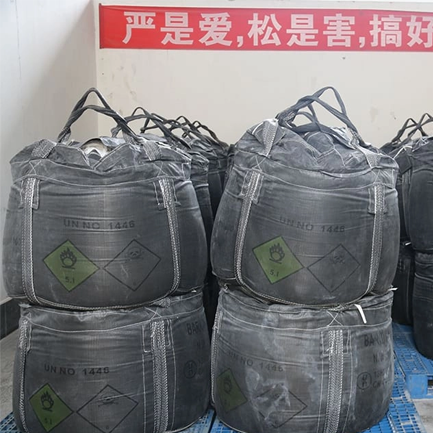
Applications and Implications of UV Reactions
Pyrotechnics and Fireworks
Barium nitrate is a central ingredient in many fireworks formulations, primarily for producing vibrant green flames. Understanding its photochemical behavior is essential for safety and performance:
Color Intensity: Exposure to UV light can subtly influence the chemical composition of pyrotechnic mixtures, potentially affecting the brightness or consistency of green flames.
Controlled Use: In pyrotechnics, UV-sensitive formulations are sometimes employed to enhance flame effects, but this requires careful calibration to avoid uncontrolled decomposition.
In essence, controlled photochemical reactions can be beneficial, but accidental UV exposure during storage or transport must be strictly avoided.
Laboratory and Research Applications
Barium nitrate’s reactivity under UV light has several laboratory implications:
Photochemical Studies: Researchers often study nitrate decomposition under UV light to understand reaction mechanisms, generate reactive oxygen species, or develop analytical methods.
UV Stability Assessment: Knowing the UV stability of barium nitrate ensures safe laboratory handling and long-term storage. Laboratories can mitigate unwanted reactions by using opaque containers and limiting light exposure.
Industrial Considerations
Industrially, understanding UV-induced reactions is vital:
Storage Protocols: Barium nitrate must be stored away from direct UV sources to prevent decomposition, maintain chemical integrity, and ensure predictable performance in downstream processes.
UV-Based Chemical Synthesis: In some controlled processes, UV light may be deliberately used to drive chemical reactions or sterilize solutions containing barium nitrate. However, such applications require precise monitoring to avoid uncontrolled decomposition.
Safety and Handling Concerns
Handling barium nitrate under UV exposure requires rigorous safety measures:
Storage: Store the compound in opaque, tightly sealed containers, in cool, dry, and well-ventilated areas. Avoid exposure to sunlight or artificial UV light sources.
Personal Protective Equipment (PPE): Gloves, goggles, and protective clothing should always be worn. Respiratory protection is recommended in areas where dust or fine powders may become airborne.
Engineering Controls: Fume hoods, ventilation systems, and UV-blocking enclosures can help prevent accidental exposure to UV-induced reactions.
Spill and Emergency Management: In the event of spills or unintended UV exposure, isolate the area, ventilate gases, and follow established chemical safety protocols to prevent accidents.
Frequently Asked Questions (FAQ)
Q1: Can barium nitrate decompose under normal sunlight?
While natural sunlight contains UV components, the energy is generally lower than laboratory UV-C sources. Minor decomposition may occur over long periods, but sunlight alone usually does not pose an immediate hazard.
Q2: What wavelength of UV light is most reactive with barium nitrate?
UV-C light (100–280 nm) is the most energetic and capable of inducing significant photochemical decomposition. UV-B and UV-A can cause minor effects but at slower rates.
Q3: Is UV-induced decomposition dangerous for pyrotechnic storage?
Yes, if barium nitrate is exposed to intense or prolonged UV light in confined spaces, decomposition can release gases and heat, increasing the risk of combustion or minor explosions.
Q4: Can UV light be used deliberately in lab reactions with barium nitrate?
Yes, under controlled conditions, UV light can initiate photochemical reactions for research or synthesis. Precise control of wavelength, intensity, and environmental factors is essential.
Q5: How should barium nitrate be stored to minimize UV effects?
Store in opaque containers, away from sunlight or artificial UV sources, in a cool and ventilated environment. This helps maintain chemical stability and ensures predictable performance.
Conclusion
Barium nitrate’s interaction with UV light is a complex yet highly significant aspect of its chemical behavior. The compound can undergo photochemical decomposition, releasing reactive oxygen species and forming barium oxide under certain conditions. Factors such as UV wavelength, intensity, particle size, concentration, and environmental conditions greatly influence the rate and extent of these reactions.
Understanding UV reactivity is essential for safely using barium nitrate in pyrotechnics, laboratory experiments, and industrial applications. Proper storage, handling, and protective measures minimize risks and ensure consistent performance. Controlled UV exposure can even be utilized in research and specialized processes, but only with rigorous safety protocols in place.
For industries and laboratories seeking high-purity, reliable barium nitrate, Qingdao Red Butterfly Precision Materials Co., Ltd. provides products engineered for stability, performance, and safety. Their high-quality barium nitrate ensures predictable UV behavior, enabling safe and effective use in sensitive applications, from fireworks and optical materials to advanced chemical synthesis and electronic components.

 English
  العربية
  Français
  Русский
  Español
  Português
  Deutsch
  italiano
  日本語
日本語  한국어
한국어  Nederlands
  Tiếng Việt
  ไทย
ไทย  Polski
  Türkçe
  አማርኛ
አማርኛ  ພາສາລາວ
  ភាសាខ្មែរ
  Bahasa Melayu
  ဗမာစာ
ဗမာစာ  தமிழ்
தமிழ்  Filipino
  Bahasa Indonesia
  magyar
  Română
  Čeština
  Монгол
  қазақ
қазақ  Српски
  हिन्दी
  فارسی
فارسی  Kiswahili
  Slovenčina
  Slovenščina
  Norsk
Norsk  Svenska
  українська
  Ελληνικά
  Suomi
Suomi  Հայերեն
  עברית
עברית  Latine
  Dansk
Dansk  اردو
اردو  Shqip
Shqip  বাংলা
বাংলা  Hrvatski
  Afrikaans
  Gaeilge
  Eesti keel
  Māori
Māori 


