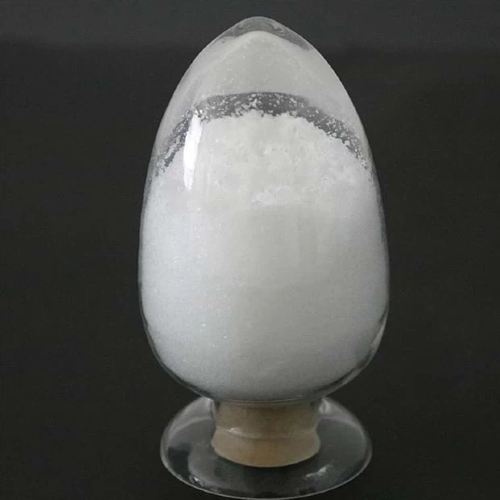
Formulating high-performance flexible PVC requires walking a tightrope. You must balance thermal stability and optical clarity while meeting strict regulatory limits. Small variables in your additive package can easily disrupt this delicate equilibrium. Many manufacturers rely on standard barium sources to stabilize their polymers. Unfortunately, these lower-grade compounds often introduce impurities like iron or carbonates. These contaminants trigger unwanted discoloration, ruin transparency, and cause inconsistent batch reactions during processing.
High-purity Barium Hydroxide Monohydrate is not a universal additive for every basic plastic. Instead, it serves as a strategic upgrade for specific, high-demand PVC applications. This guide outlines the technical benchmarks and financial thresholds for switching your stabilizer systems to this premium compound. You will learn how high-purity barium transforms formulation efficiency and ultimately protects your bottom line.
Key Takeaways
High-purity Barium Hydroxide Monohydrate resolves critical clarity and plate-out issues in flexible PVC applications.
It acts as a highly efficient synergistic component in advanced Barium-Zinc (Ba-Zn) heat stabilizers.
Supplier shortlisting must prioritize batch-to-batch consistency, strict moisture control, and verifiable Technical Data Sheet (TDS) claims.
When Standard Barium Compounds Fall Short in PVC Processing
PVC processing subjects polymers to intense heat and shear forces. Standard stabilizers often fail under these extreme conditions. Identifying the exact limitations of lower-grade barium compounds helps formulators prevent costly production errors.
The Performance Gap
Many legacy formulations utilize standard Barium Hydroxide octahydrate. This cheaper alternative carries eight molecules of crystallization water. During high-temperature extrusion, this moisture vaporizes quickly. Rapid moisture release causes voids, blistering, and structural weakness in the final plastic matrix. Furthermore, lower-grade compounds often feature inconsistent particle sizes. Uneven particles resist proper dispersion. They clump together during mixing. This creates localized zones of poor thermal stability across the polymer web.
Application Mismatch
Impurities negatively impact high-end flexible PVC. Consider applications like medical tubing, premium transparent films, or specialized wire coatings. Medical tubing demands absolute optical clarity for fluid monitoring. Even microscopic iron contaminants introduce a yellow tint. Transparent packaging films cannot tolerate the haze caused by carbonate impurities. Using standard-grade barium in these premium applications virtually guarantees a high rejection rate. The application requirements simply outpace the material capabilities.
The "Plate-Out" Problem
Standard grades heavily contribute to mold fouling and plate-out. Plate-out occurs when incompatible stabilizer components separate from the PVC melt. They migrate to the surface and coat your manufacturing equipment. This sticky residue builds up on continuous extrusion dies and calendering rolls. Operators must routinely halt production lines to scrape and clean machinery. Operational downtime destroys manufacturing margins. High-purity compounds drastically reduce this migration. They remain locked within the polymer matrix.
3 Core Pillars for Evaluating Barium Hydroxide Monohydrate
Upgrading your stabilizer package requires a clear evaluation framework. Formulators should assess high-purity monohydrate across three distinct performance pillars.
Optical Clarity & Transparency
The first pillar focuses on visual aesthetics. High-purity levels prevent the formation of light-scattering byproducts inside the polymer matrix. When standard barium reacts during stabilization, trace impurities often form insoluble salts. These salts disrupt light transmission. High-purity monohydrate avoids this chemical trap. It remains completely soluble within the plasticizer matrix. This outcome is essential for transparent PVC formulations. In these markets, visual aesthetics and crystal-clear light transmission act as absolute pass/fail criteria.
Long-Term Thermal Durability
The second pillar centers on heat resistance. Unstabilized PVC degrades rapidly when exposed to heat. It releases hydrochloric acid (HCl), which triggers a destructive chain reaction. Barium acts synergistically alongside zinc stabilizers in Ba-Zn systems. Zinc provides excellent early color hold but degrades quickly. Barium neutralizes the released HCl and regenerates the active zinc compounds. High-purity monohydrate executes this mechanism far more efficiently than lower-grade alternatives. This synergistic outcome sustains color hold. It prevents early yellowing and maintains physical integrity throughout prolonged, high-temperature processing.
Safety, Purity, and Consistency
The final pillar addresses compliance and predictability. High-purity chemical grades feature incredibly strict trace impurity limits. Manufacturers rigidly control iron, chlorides, and heavy metals during synthesis. Predictable chemistry ensures predictable formulation scaling. You can transition from a laboratory bench test to a full production run confidently. Furthermore, these high-purity compounds support compliance with regional environmental standards. They offer much safer handling profiles compared to volatile or toxic heavy-metal alternatives.
Iron Limits: Keeps inherent tinting minimal.
Chloride Limits: Prevents premature acid degradation.
Heavy Metal Limits: Ensures compliance for medical and food-contact use.
Formulation Integration: Solid vs. Liquid Ba-Zn Systems
Introducing a new chemical component requires careful matrix matching. Barium Hydroxide Monohydrate integrates uniquely depending on your chosen stabilizer state.
Matrix Compatibility
Solid powder stabilizers rely on physical blending. You must mill the monohydrate into a fine powder. It then mixes alongside zinc soaps and co-stabilizers. High-purity grades offer superior friability, meaning they break down easily for uniform distribution. Liquid stabilizer intermediates present a different challenge. You must dissolve the barium into organic solvents or plasticizers. High-purity monohydrate exhibits excellent solubility in these organic carrier fluids. It leaves behind zero gritty residues. This ensures your liquid Ba-Zn packages remain smooth and pumpable over long storage periods.
Moisture Management
Moisture control separates good formulations from flawless ones. We can clearly observe the distinct advantage of the monohydrate form over the octahydrate form.
Feature | Monohydrate Form | Octahydrate Form |
Water Molecules | One (H₂O) | Eight (8H₂O) |
Processing Behavior | Minimal free moisture release under heat. | Releases massive steam volumes during extrusion. |
End-Product Defect Risk | Very Low (Maintains smooth, clear surfaces). | Very High (Causes internal bubbling and porosity). |
Active Barium Content | High (Less weight wasted on water). | Low (Much of the bulk weight is just water). |
By minimizing free moisture during compounding, the monohydrate prevents bubbling and porosity. Your final PVC melt remains dense, strong, and visually flawless.
Implementation Risk
You must actively manage dispersion challenges. Localized degradation occurs if the barium clumps in one corner of the mixing vat. Establish proper mixing protocols. Utilize high-shear mixers for liquid blends. Implement step-wise addition sequences for powder formulations. Always monitor the torque on your mixing equipment. Stable torque readings indicate a well-dispersed, homogenous batch.
How to Shortlist a Barium Hydroxide Supplier for PVC Stabilizers
Securing a reliable supply chain is just as critical as the chemical itself. You must vet potential partners rigorously before authorizing a raw material switch.
Verifying the TDS (Technical Data Sheet)
Never accept marketing claims at face value. Demand the exact technical specifications. A reputable supplier will readily provide a comprehensive TDS. Scrutinize these specific metrics:
Ba(OH)₂ Content: Ensure the guaranteed purity sits comfortably above 99%.
Iron (Fe) Limits: Look for strict caps, typically below 10-15 ppm, to guarantee color stability.
Carbonate (CO₃) Limits: High carbonates indicate poor manufacturing or storage degradation. Reject high-carbonate lots.
Batch-to-Batch Consistency
Rigorous quality control remains non-negotiable for stable PVC compounding. If one delivery features perfect purity and the next contains elevated moisture, your production line will crash. Look for suppliers holding recognized ISO certifications. Mandate a specific Certificate of Analysis (COA) attached to every single batch delivery. Review these documents before unloading the material into your silos. Consistency breeds manufacturing confidence.
Supply Chain Resilience
Evaluate the supplier beyond their laboratory capabilities. Industry expertise matters immensely. Do they understand the specific demands of the PVC additives market? Assess their packaging integrity. Barium hydroxide aggressively absorbs carbon dioxide from the atmosphere. Poorly sealed bags allow the material to degrade into useless barium carbonate during transit. Demand moisture-barrier packaging. Verify their standard lead times. A supplier with robust local warehousing prevents catastrophic stock-outs during global shipping disruptions.
Conclusion
High-purity Barium Hydroxide Monohydrate serves as a specialized, highly effective tool for modern formulators. It delivers top-tier optical clarity and robust thermal stability within advanced Ba-Zn systems. By neutralizing destructive acids and resisting moisture release, it fundamentally elevates flexible PVC manufacturing.
Use a simple decision matrix to guide your next steps. Review your current production logs. If your flexible PVC line struggles frequently with transparency issues, early heat discoloration, or excessive moisture-related surface defects, high-purity BHMH represents the most logical upgrade path. The operational savings generated from reduced plate-out and lower scrap rates quickly justify the initial material investment.
Do not let substandard additives throttle your manufacturing potential. Request a technical formulation consultation today. Ask your preferred chemical partner for exact TDS specifications. Secure a sample batch and begin your internal laboratory testing immediately.
FAQ
Q: What is the difference between Barium Hydroxide Monohydrate and Octahydrate in PVC processing?
A: The primary difference lies in the water of crystallization. Monohydrate contains one water molecule. Octahydrate contains eight. During high-temperature PVC processing, octahydrate releases significant free moisture. This excess steam causes physical defects like bubbling, porosity, and surface blisters in the final polymer matrix. Monohydrate minimizes this moisture release. Formulators choose it specifically to ensure a smooth, defect-free finish in high-quality extrusions.
Q: Can Barium Hydroxide Monohydrate completely replace lead-based stabilizers?
A: No, it cannot act as a standalone replacement. Formulators use it as a critical synergistic component within mixed-metal systems. Typically, they pair it alongside zinc stabilizers. This combined Ba-Zn system effectively replaces toxic lead or cadmium packages. The barium neutralizes hydrochloric acid while the zinc provides early color hold. Together, they enable safe, regulatory-compliant PVC formulations.
Q: How does purity level affect the color of the final flexible PVC product?
A: Lower-purity grades contain trace metals like iron. These contaminants catalyze polymer degradation. They also introduce inherent tinting into the stabilizer mix. When exposed to processing heat, these impurities trigger early yellowing. High-purity grades strictly limit trace metals. This maintains optical clarity and prevents unwanted color shifts. It ensures premium transparent PVC remains crystal clear over its entire lifespan.
Q: What are the storage and handling requirements for high-purity BHMH?
A: You must store this chemical in airtight packaging. Exposure to atmospheric carbon dioxide causes it to form barium carbonate, ruining its stabilizing efficiency. Facilities should keep it in cool, dry environments away from moisture. Operators must wear standard personal protective equipment, including gloves and masks. This prevents dust inhalation and skin irritation. Proper inventory rotation ensures optimal performance.

 English
  العربية
  Français
  Русский
  Español
  Português
  Deutsch
  italiano
  日本語
日本語  한국어
한국어  Nederlands
  Tiếng Việt
  ไทย
ไทย  Polski
  Türkçe
  አማርኛ
አማርኛ  ພາສາລາວ
  ភាសាខ្មែរ
  Bahasa Melayu
  ဗမာစာ
ဗမာစာ  தமிழ்
தமிழ்  Filipino
  Bahasa Indonesia
  magyar
  Română
  Čeština
  Монгол
  қазақ
қазақ  Српски
  हिन्दी
  فارسی
فارسی  Kiswahili
  Slovenčina
  Slovenščina
  Norsk
Norsk  Svenska
  українська
  Ελληνικά
  Suomi
Suomi  Հայերեն
  עברית
עברית  Latine
  Dansk
Dansk  اردو
اردو  Shqip
Shqip  বাংলা
বাংলা  Hrvatski
  Afrikaans
  Gaeilge
  Eesti keel
  Māori
Māori 


