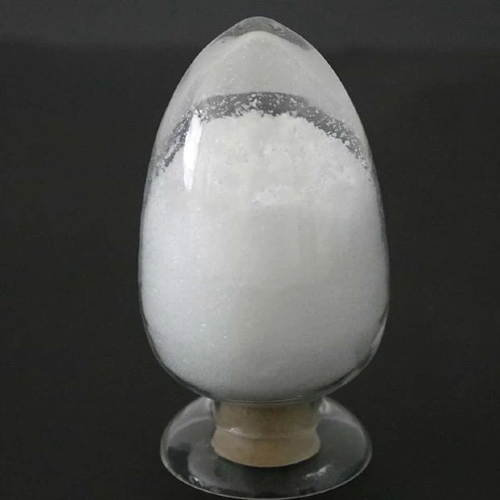
Process engineers face a persistent operational bottleneck in lipid processing. Achieving high-yield oil saponification and transesterification often incurs excessive downstream purification costs. Traditional generic alkalis produce highly inconsistent results. They frequently trigger unwanted side reactions, driving up separation expenses and extending processing times. To solve this, advanced facilities now shift toward targeted alkaline earth metal catalysts. By optimizing catalyst selection, you can significantly minimize these parasitic side reactions.
This article provides an evidence-based framework for facility managers and chemical engineers. We will explore how to evaluate, shortlist, and implement high-purity Barium Hydroxide Monohydrate at a commercial scale. You will learn how precise hydration states and strict impurity profiling dictate operational success. By treating this catalyst as a strategic asset rather than a basic commodity, your facility can improve overall yield, ensure strict regulatory compliance, and radically lower the total cost of ownership.
Key Takeaways
Yield vs. Purity: High-purity Barium Hydroxide Monohydrate reduces unwanted byproduct formation (like insoluble soaps) compared to lower-grade alternatives.
TCO Advantage: Upfront catalyst costs are offset by reduced post-reaction washing cycles and lower energy consumption during separation.
Compliance Dependency: Industrial and regulatory frameworks mandate strict heavy metal and carbonate impurity thresholds.
Scale-Up Risk: Vendor consistency from lab pilot to full-scale batch is the primary failure point in catalyst procurement.
The Business Case: Standard vs. High-Purity Barium Hydroxide
Many procurement teams default to standard industrial-grade catalysts to save upfront capital. This approach often introduces hidden operational bottlenecks. Standard grades contain variable moisture levels and high carbonate concentrations. These inconsistencies lead to unpredictable saponification rates. Consequently, plant operators end up guessing batch times, disrupting continuous manufacturing schedules.
TCO and ROI Drivers
The true total cost of ownership (TCO) emerges during downstream processing. Impure catalysts demand aggressive acid-washing cycles to neutralize and remove unreacted residues. Furthermore, separating generic alkalis often requires complex spectrophotometric determination of residual ions. High-purity Barium Hydroxide prevents these costly downstream interventions. Cleaner initial reactions drastically simplify your catalyst recovery. Facilities experience lower energy consumption during phase separation, yielding a rapid return on investment (ROI).
Cost of Poor Quality (CoPQ)
Using sub-standard catalysts directly increases your Cost of Poor Quality. Heavy metal and carbonate impurities cause rapid equipment scaling inside heat exchangers and reactor vessels. This mechanical fouling mandates frequent maintenance shutdowns. Additionally, inconsistent reaction kinetics risk producing off-spec product batches. Disposing of heavily contaminated catalyst waste also drives up environmental compliance costs.
Chart: Standard vs. High-Purity Catalyst Impact
Operational Metric | Standard Industrial Grade | High-Purity Monohydrate |
Reaction Consistency | Highly variable batch times | Predictable, stable kinetics |
Downstream Washing | Requires aggressive acid washing | Minimal washing required |
Equipment Scaling | High risk of reactor fouling | Low risk of deposit formation |
Waste Disposal Costs | High (complex neutralization) | Low (cleaner separation) |
Critical Evaluation Criteria for Saponification Catalysts
Hydration State and Catalytic Activity
Selecting the correct hydration state profoundly influences your lipid saponification efficiency. Chemical engineers generally prefer the monohydrate form over octahydrate or anhydrous alternatives. The octahydrate carries too much molecular water. In oil methanolysis, excess water shifts the reaction equilibrium backward, promoting unwanted free fatty acid formation instead of the desired esterification. Conversely, anhydrous forms present extreme handling challenges due to their aggressive hydroscopic nature. The monohydrate provides the perfect equilibrium. It delivers an optimized active surface area while maintaining long-term structural stability.
Impurity Profiling
Analytical impurity profiling dictates the true value of your catalyst. You must evaluate two critical contaminants before approving a raw material batch.
Carbonate Limits: Barium carbonate offers zero catalytic value. It acts as complete dead weight in the reactor. High carbonate levels blind the active alkaline sites, effectively suffocating the reaction. Evaluating the maximum acceptable limits of this impurity prevents severe mechanical fouling.
Heavy Metal Tolerances: Trace metals pose a dual threat. They can poison secondary catalysts utilized downstream. More importantly, heavy metal residues violate strict end-product compliance rules. Tracing these metals through precise laboratory assays guarantees your final product remains safe for the consumer market.
Particle Size and Solubility Metrics
Catalyst dispersion rates dictate overall reaction kinetics. Fine powders offer a massive surface area, dissolving rapidly into lipid matrices. However, excessively fine particles generate severe dust clouds during handling. Facilities must balance particle size against solubility metrics. A uniform, mid-micron particle distribution ensures steady dispersion without compromising occupational safety.
Navigating Regulatory Compliance and Safety Standards
Industry Frameworks
Your end-use application entirely dictates your raw material purity requirements. For example, downstream products intended for human consumption or pharmaceutical use face intense scrutiny. Regulatory frameworks, such as FDA Title 21 CFR, mandate strict limitations on indirect food additives and catalyst residues. Achieving compliance requires utilizing raw materials that inherently lack prohibited contaminants. You cannot rely solely on downstream purification to meet these stringent thresholds.
Safety and Handling Directives
Occupational safety remains a top priority when handling alkaline earth metals. Procurement teams must align chemical sourcing with established worker safety standards. Frameworks similar to MHLW (Ministry of Health, Labour and Welfare) or PMDA guidelines strictly govern chemical exposure limits. Dust inhalation and skin contact pose significant risks. High-purity formulations with controlled particle sizes help facilities minimize airborne particulate matter, keeping workers safe and satisfying regulatory audits.
Documentation Requirements
Regulators demand absolute transparency. You must maintain an unbroken chain of documentation. Rigorous Safety Data Sheets (SDS) outline essential emergency response and handling procedures. Every incoming shipment requires a comprehensive Batch Certificate of Analysis (CoA). For high-risk applications, forward-thinking facilities mandate third-party lab verification. Independent spectrophotometric testing proves the vendor's claims, shielding your company from compliance liabilities.
Implementation Realities: Handling, Storage, and Scaling
Mitigating Atmospheric Degradation
This compound acts as a powerful carbon dioxide scavenger. It readily absorbs atmospheric CO2, converting the active hydroxide base into useless barium carbonate. You must implement robust handling protocols to maintain catalyst efficacy. Utilizing airtight packaging and climate-controlled storage forms the first line of defense. For bulk commercial operations, engineers install sealed silos equipped with desiccant breathers. Nitrogen blanketing systems represent a highly effective best practice to halt atmospheric degradation entirely.
Scale-Up Risks
Scaling up chemical processes introduces severe vulnerabilities. The performance gap between academic lab studies and continuous commercial flow reactors catches many engineers off guard. Benchtop sunflower oil methanolysis often achieves perfect conversion rates due to ideal mixing conditions. However, commercial reactors face profound mass transfer limitations. Vendor consistency becomes the primary failure point here. If the catalyst purity fluctuates between the lab sample and the bulk delivery, your entire commercial scale-up will fail.
Integration with Existing Infrastructure
Introducing a new solid catalyst requires careful infrastructure audits. Evaluate equipment compatibility before running the first batch. Highly alkaline environments demand specific corrosion resistance from your wetted reactor parts. Standard stainless steel often suffices, but gasket and seal materials require thorough chemical compatibility checks. Additionally, feeding mechanisms for solid catalysts need upgrades. Gravimetric feeders and specialized rotary valves prevent the monohydrate powder from clumping or bridging inside the hopper.
Procurement Shortlisting Logic: How to Evaluate Suppliers
Batch-to-Batch Consistency
A supplier is only as good as their worst batch. You must audit a supplier's quality control process thoroughly. Request historical production data to prove batch-to-batch consistency. Do not accept marketing brochures as proof. Demand raw spectrophotometric or titration data for proof of purity. Reliable vendors happily provide complex analytical readouts demonstrating exactly how they measure trace heavy metals and carbonates.
Supply Chain Resilience
Global chemical supply chains suffer from frequent disruptions. Evaluating raw material sourcing reveals hidden risks. Ask vendors where they mine or synthesize their base materials. Assess their true production capacity versus their current market commitments. Understand their realistic lead times during peak seasonal demands. A resilient supplier maintains strategic buffer stock, ensuring your continuous saponification process never halts due to delayed shipments.
Next-Step Actions: Moving to Pilot
Once you verify the paperwork, you must move from paper evaluation to physical pilot testing. Never switch your entire production line to a new catalyst overnight. Set up a controlled A/B pilot against your existing standard catalysts. Use the following structured approach for the pilot phase:
Establish Baselines: Record the exact yield, reaction time, and washing cycles required using your current standard-grade catalyst.
Isolate Variables: Run the high-purity alternative using the exact same lipid feedstock, temperature, and reactor vessel.
Measure Kinetics: Track the speed of the saponification reaction to determine if the active surface area improves batch times.
Quantify Downstream Savings: Calculate the reduction in acid, water, and energy used during the post-reaction separation phase.
Analyze Final Purity: Submit the finished product to a third-party lab to verify residual heavy metal and carbonate levels.
Conclusion
Treating high-purity saponification catalysts as strategic process enablers transforms your operational efficiency. Shifting away from standard industrial grades eliminates hidden costs, stabilizes unpredictable batch times, and slashes downstream washing requirements. You must prioritize precise hydration states and strict impurity profiles to protect your equipment from mechanical fouling.
Verifying vendor claims through empirical A/B pilot data serves as the only reliable path to improving saponification margins. Paper audits help you shortlist, but continuous flow testing proves true commercial viability. Do not let atmospheric degradation or poor vendor consistency derail your scale-up efforts.
We encourage you to audit your current process immediately. Request detailed technical data sheets from prospective suppliers. Consult with your chemical engineering team to define the exact purity specifications required to optimize your specific facility.
FAQ
Q: What is the difference in application between Barium Hydroxide Monohydrate and Barium Hydroxide Octahydrate?
A: The primary difference lies in water content. The octahydrate introduces excess moisture, which impedes lipid methanolysis by shifting equilibrium toward soap formation rather than esterification. The monohydrate minimizes this water burden. It provides a superior mass-to-activity ratio, enhances reaction kinetics, and remains far more stable during extended storage.
Q: How do Barium Carbonate impurities affect the saponification process?
A: Barium carbonate provides zero catalytic value, acting as inert dead weight. High carbonate levels significantly reduce the number of active alkaline sites available to drive the reaction. Furthermore, these insoluble particles cause mechanical fouling in reactors and pipework, increasing your maintenance downtime and cleaning costs.
Q: Are there regulatory restrictions on using Barium Hydroxide in edible oil processing?
A: Yes. Downstream applications like food or pharma-grade lipids fall under stringent frameworks, such as FDA Title 21 CFR. These regulations mandate complete separation of the catalyst from the final product. Strict local safety frameworks limit residual heavy metals to trace parts-per-million levels to ensure human consumption safety.
Q: How should this chemical be stored to preserve its monohydrate structure?
A: You must store it in an airtight, climate-controlled environment. The compound readily absorbs atmospheric carbon dioxide, converting into useless barium carbonate. Strict humidity control prevents unintended hydration shifts. Utilizing sealed silos equipped with nitrogen blanketing systems represents a highly recommended best practice for commercial-scale storage.

 English
  العربية
  Français
  Русский
  Español
  Português
  Deutsch
  italiano
  日本語
日本語  한국어
한국어  Nederlands
  Tiếng Việt
  ไทย
ไทย  Polski
  Türkçe
  አማርኛ
አማርኛ  ພາສາລາວ
  ភាសាខ្មែរ
  Bahasa Melayu
  ဗမာစာ
ဗမာစာ  தமிழ்
தமிழ்  Filipino
  Bahasa Indonesia
  magyar
  Română
  Čeština
  Монгол
  қазақ
қазақ  Српски
  हिन्दी
  فارسی
فارسی  Kiswahili
  Slovenčina
  Slovenščina
  Norsk
Norsk  Svenska
  українська
  Ελληνικά
  Suomi
Suomi  Հայերեն
  עברית
עברית  Latine
  Dansk
Dansk  اردو
اردو  Shqip
Shqip  বাংলা
বাংলা  Hrvatski
  Afrikaans
  Gaeilge
  Eesti keel
  Māori
Māori 


