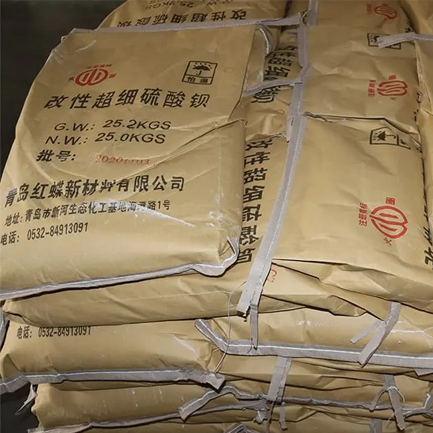
Barium sulfate (BaSO₄) is a white, crystalline, inorganic compound with exceptional chemical stability. It is one of the most widely used barium compounds across industrial, medical, and research applications. Its remarkable inertness and insolubility in water make it a safe and versatile additive in various fields. In industry, barium sulfate serves as a filler and pigment in plastics, paints, coatings, rubber, and high-performance materials. In medical settings, it is used as a radiopaque agent in X-ray imaging and gastrointestinal examinations. Additionally, research laboratories utilize it for specialized chemical and material studies, particularly where chemical inertness and high density are required.
Proper storage of barium sulfate is critical for maintaining its quality and performance. While it is chemically stable under most conditions, environmental factors such as humidity, light, and temperature can affect its physical properties, particle dispersion, and usability. Understanding whether refrigeration is necessary or beneficial is essential for manufacturers, laboratories, and healthcare providers to ensure long-term stability and consistent performance.
Physical and Chemical Properties of Barium Sulfate
Barium sulfate is characterized by several physical and chemical properties that make it unique and valuable across industries:
Insolubility in Water and Organic Solvents: BaSO₄ is practically insoluble in water, acids (except for concentrated sulfuric acid), and most organic solvents. This property contributes to its stability, non-toxicity, and safety, particularly in medical and pharmaceutical applications. Because it does not dissolve easily, barium sulfate remains chemically inert even under varying environmental conditions.
High Chemical Stability and Inertness: Unlike other barium compounds, barium sulfate does not readily react with acids or bases at ambient conditions. This chemical inertness makes it ideal as a pigment, filler, or X-ray contrast agent, as it does not interfere with chemical processes or react with other components in composite materials.
Low Reactivity with Temperature Changes: BaSO₄ maintains stability across a broad range of temperatures, showing minimal thermal expansion or contraction. While extreme heat can decompose the compound into barium oxide (BaO) and sulfur oxides at very high temperatures, normal storage and refrigeration conditions do not induce such reactions.
Particle Size, Whiteness, and Surface-Modified Grades: Modern production techniques allow barium sulfate to be produced in ultrafine or surface-modified forms. Ultrafine grades have high dispersibility and smoothness, making them suitable for high-end coatings, plastics, and specialty applications. Surface-modified grades often include organic coatings to improve compatibility with polymers and paints, enhance gloss, and prevent aggregation.
Recommended Storage Conditions
Even though barium sulfate is chemically stable, proper storage ensures long-term performance and prevents physical degradation. Recommended storage conditions include:
Optimal Temperature Ranges: BaSO₄ should be stored in a cool environment, ideally between 15°C and 25°C. Avoiding temperature extremes prevents thermal stress that could cause clumping or particle size variation.
Humidity Control and Ventilation: Barium sulfate is hygroscopic to a minor degree, and exposure to high humidity can lead to particle aggregation or caking. Well-ventilated, low-humidity storage areas are essential to maintain flowability and prevent clumps.
Protection from Direct Sunlight, Heat, and Moisture: Ultraviolet (UV) light and direct heat are not chemically harmful but can degrade surface-modified grades or affect aesthetics. Keeping BaSO₄ away from direct sunlight, open flames, and heat sources maintains its high whiteness and prevents potential discoloration.
Typical Storage Containers: Sealed plastic bags, lined drums, or containers with moisture-resistant liners are recommended. Air-tight packaging minimizes exposure to dust, contaminants, and humidity, ensuring consistent product quality.
Can Barium Sulfate Be Refrigerated?
A common question among manufacturers and laboratory personnel is whether refrigerating barium sulfate is necessary or beneficial. The short answer is: refrigeration is generally not required for barium sulfate, but under certain circumstances, it may be considered with caution.
Effect of Low Temperatures on Stability: BaSO₄ is chemically inert and does not degrade at low temperatures. Refrigeration will not improve its chemical stability, as it is already highly stable at ambient conditions. Its particle structure and surface properties remain largely unaffected by cooling.
Particle Dispersion Considerations: While low temperatures do not chemically alter BaSO₄, condensation may occur when the material is removed from a cold environment. Moisture can form on the particles, leading to clumping, caking, or compromised dispersibility, which is particularly problematic for ultrafine or surface-modified grades used in high-performance plastics, paints, and coatings.
Risks of Improper Refrigeration: If stored in a refrigerator without proper sealing, barium sulfate may absorb moisture from humid air, forming lumps that reduce flowability. Once clumped, it can be challenging to disperse evenly in resins, inks, or coatings.
Comparison of Ambient vs. Refrigerated Storage: For industrial-grade barium sulfate used in plastics, coatings, and rubber, ambient storage in a cool, dry, and ventilated space is typically superior to refrigeration. Medical-grade barium sulfate, which must meet strict particle size and purity requirements, also benefits more from sealed storage at room temperature than from cooling. Refrigeration is only occasionally recommended for very specific experimental or temporary storage situations, but proper packaging is crucial.
Factors Affecting Barium Sulfate Stability
Several environmental and handling factors influence the stability and usability of barium sulfate:
Humidity and Moisture Exposure: Even though BaSO₄ is insoluble, prolonged exposure to moisture can lead to caking or clumping. Clumped material is difficult to disperse in plastics, paints, or inks, and may require milling or sieving to restore its uniformity.
Light Exposure: UV or intense sunlight can affect certain surface-modified grades. While the core compound remains chemically inert, surface treatments designed to enhance polymer compatibility or gloss may degrade over time, slightly reducing performance in coatings or plastics.
Contamination from Other Chemicals: BaSO₄ should be stored away from acids, alkalis, and reactive chemicals to avoid contamination. Even though it is chemically stable, impurities or contamination can impact dispersibility and color in industrial applications.
Handling Procedures: Using clean, dry scoops or equipment prevents contamination and preserves particle integrity. Minimizing agitation or unnecessary exposure reduces dust generation and maintains the high-quality properties of the compound.
Storage Tips for Different Grades
Barium sulfate is produced in various grades to suit different applications, and storage recommendations may vary slightly:
Industrial-Grade Barium Sulfate: Used in plastics, paints, coatings, and rubber. Store in sealed containers in a cool, ventilated space. Avoid direct sunlight and excessive moisture. Ambient storage is generally sufficient.
Medical-Grade Barium Sulfate: Used for X-ray contrast agents. Requires strict particle size control and purity. Must be stored in tightly sealed containers, away from contaminants and moisture. Refrigeration is usually unnecessary if proper room-temperature storage is maintained.
Specialty and Ultrafine Grades: Used in high-performance plastics, coatings, and radiation-shielding materials. These grades are sensitive to moisture and may benefit from controlled environments, but refrigeration should be avoided unless moisture control is guaranteed through desiccants or sealed packaging.
Long-Term vs. Short-Term Storage: For short-term storage (weeks to months), standard ambient conditions are sufficient. Long-term storage (years) requires sealed containers, low humidity, and protection from light and dust. Refrigeration is not required if these measures are implemented effectively.
Advantages of Proper Storage
Maintaining proper storage conditions for barium sulfate offers multiple benefits:
Maintaining Particle Size Distribution and Flowability: Prevents caking and ensures the compound disperses evenly in plastics, paints, coatings, and inks.
Preserving Chemical Inertness and Safety: Protects the inert nature of BaSO₄, ensuring it remains non-reactive and safe for industrial and medical applications.
Ensuring Consistent Performance: Properly stored barium sulfate maintains optical properties, whiteness, surface smoothness, and particle dispersibility, which are essential for high-quality end products.
Reducing Waste and Preventing Degradation: Avoids losses caused by clumping, contamination, or moisture absorption, improving efficiency and reducing costs for manufacturers and laboratories.
FAQ
Q1: Will refrigerating barium sulfate improve its shelf life? A1: No, barium sulfate is already chemically stable at ambient temperatures. Refrigeration does not significantly enhance its shelf life and may introduce risks of condensation and clumping if not handled properly.
Q2: What happens if barium sulfate absorbs moisture? A2: Moisture can cause caking or clumping, reducing flowability and making it harder to disperse in plastics, coatings, and inks. This can compromise the quality of the final product.
Q3: Is refrigeration necessary for medical-grade BaSO₄? A3: Generally, no. Medical-grade barium sulfate should be stored in sealed, dry containers at room temperature. Proper packaging and moisture control are more critical than refrigeration.
Q4: How should barium sulfate be handled after refrigeration? A4: If refrigeration is used, allow the material to equilibrate to room temperature while still sealed to prevent condensation. Ensure containers are dry and avoid opening until ready for use.
Q5: Can different grades of barium sulfate be stored together safely? A5: Yes, as long as they are stored in sealed containers to prevent cross-contamination and are not exposed to moisture or reactive substances. Separate handling is preferred for ultrafine or surface-modified grades to maintain performance integrity.
Conclusion
Barium sulfate is a highly stable and versatile compound, valued across industries, medical applications, and research for its chemical inertness, insolubility, and exceptional physical properties. While refrigeration is generally unnecessary, proper storage at ambient temperatures in sealed, dry, and ventilated containers ensures long-term quality and performance. Avoiding moisture and condensation is especially important for ultrafine or surface-modified grades. Following recommended storage practices preserves particle integrity, safety, and functionality in plastics, coatings, rubber, and medical imaging. For high-quality barium sulfate and professional guidance on selecting the right grades for your applications, Qingdao Red Butterfly Precision Materials Co., Ltd. offers expertise, reliable supply, and tailored solutions. Contact them to ensure optimal performance and consistent results for your industrial or medical needs.
As the largest high-end inorganic barium salt production enterprise in China, we provide customized solutions for various high-purity barium hydroxide, barium carbonate, barium sulfate, barium nitrate, barium chloride and other products to the world.

 English
  العربية
  Français
  Русский
  Español
  Português
  Deutsch
  italiano
  日本語
日本語  한국어
한국어  Nederlands
  Tiếng Việt
  ไทย
ไทย  Polski
  Türkçe
  አማርኛ
አማርኛ  ພາສາລາວ
  ភាសាខ្មែរ
  Bahasa Melayu
  ဗမာစာ
ဗမာစာ  தமிழ்
தமிழ்  Filipino
  Bahasa Indonesia
  magyar
  Română
  Čeština
  Монгол
  қазақ
қазақ  Српски
  हिन्दी
  فارسی
فارسی  Kiswahili
  Slovenčina
  Slovenščina
  Norsk
Norsk  Svenska
  українська
  Ελληνικά
  Suomi
Suomi  Հայերեն
  עברית
עברית  Latine
  Dansk
Dansk  اردو
اردو  Shqip
Shqip  বাংলা
বাংলা  Hrvatski
  Afrikaans
  Gaeilge
  Eesti keel
  Māori
Māori