Introduction
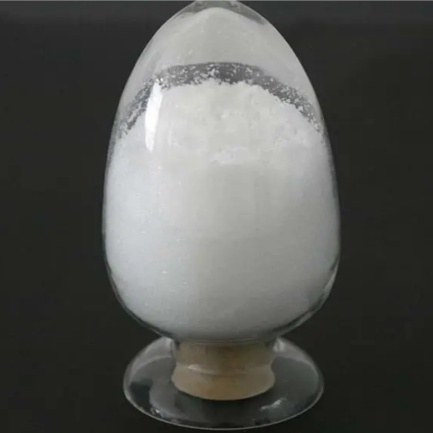
Precision materials often decide final product quality. Barium Nitrate-High Purity stands out where color accuracy, surface finish, and optical performance matter. It delivers controlled reactions, clean melting behavior, and stable processing results. In this article, you will explore how high-purity barium nitrate supports pyrotechnics, ceramics, and glass manufacturing, and why its consistency, reliability, and performance advantages make it a preferred choice for demanding industrial applications.
What Defines Barium Nitrate-High Purity for Industrial Use
Purity Grades and Chemical Consistency
Barium Nitrate-High Purity typically meets or exceeds 99% assay levels, ensuring minimal foreign ions. This level of control reduces unwanted reactions during firing or combustion. Trace metals such as iron or alkali residues can distort flame color or cloud glass. High-purity material limits these risks through tighter production and filtration controls. Compared to technical-grade barium nitrate, high-purity grades show far better consistency between batches. For manufacturers, this consistency translates into fewer formulation adjustments and more reliable processing outcomes.
Physical and Reactive Properties Relevant to Applications
High-purity barium nitrate offers strong oxidizing power with controlled oxygen release. This balance is critical in pyrotechnics and high-temperature firing. Its high water solubility allows uniform dispersion in formulations or melts. Particle size uniformity also improves blending behavior, reducing segregation during handling. Thermally, it decomposes predictably under heat, aligning well with kiln cycles and combustion systems. These physical properties allow it to perform smoothly across very different production environments.
Performance Benefits of High Purity Barium Nitrate
In precision-driven manufacturing, raw material purity directly affects process stability and product consistency. High-purity barium nitrate minimizes interference from impurities, allowing reactions, melting behavior, and final product properties to remain controlled and repeatable across production cycles.
| Aspect | Technical Indicator / Parameter | Typical Industry Range | Practical Impact in Applications | Usage Considerations |
| Chemical Purity | Ba(NO₃)₂ assay | ≥99.0% (high-purity grade), up to ≥99.3% | Ensures stable reaction pathways and predictable performance | Always verify batch-specific COA values |
| Impurity Control | Fe, Na, K trace metals | Individual metals typically ≤0.01–0.05 wt% (standard references) | Prevents flame color shift, glass haze, and glaze contamination | Iron content is especially critical for optical and color uses |
| Particle Size Distribution | Powder or crystal size | Commonly 50–300 μm for controlled industrial grades | Improves mixing uniformity and formulation consistency | Excessively fine powder may affect flowability |
| Solubility in Water | Solubility at 20 °C | Approx. 8–10 g per 100 g water (literature values) | Supports accurate solution preparation and dosing | Dissolution rate depends on temperature and agitation |
| Thermal Decomposition Behavior | Decomposition temperature range | Approximately 500–700 °C | Matches kiln firing curves and combustion profiles | Heating rate should align with process design |
| Batch-to-Batch Stability | Performance variation | Low variability for high-purity material | Reduces formulation adjustment and process drift | Long-term sourcing consistency is recommended |
| Finished Product Defect Rate | Bubbles, discoloration, surface unevenness | Significantly reduced vs. technical grade (industry experience) | Improves visual quality and yield | Must be combined with proper process control |
| Production Efficiency | Downtime and rework frequency | Lower with high-purity input | Increases throughput and operational efficiency | Validate compatibility during raw material changeovers |
Tip:For applications where color accuracy, transparency, or surface quality define product value, high-purity barium nitrate often delivers savings beyond material cost by reducing process variability and rework.
Barium Nitrate-High Purity in Pyrotechnics Applications
Green Flame Color Production and Stability
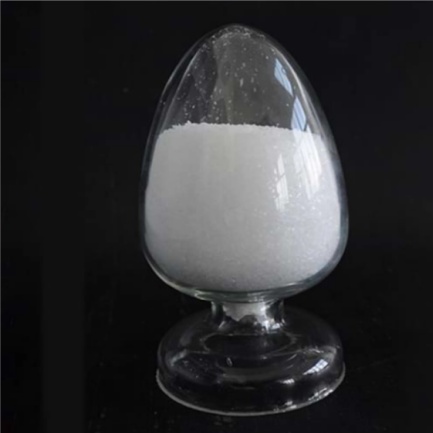
Barium Nitrate-High Purity is widely recognized for producing vivid green flames. Purity plays a decisive role here. Impurities can shift flame color toward yellow or dull the brightness. High-purity material emits cleaner green wavelengths, resulting in sharper visual impact. This consistency is essential for professional fireworks, signal devices, and choreographed displays. It allows designers to predict color output accurately, even in complex formulations.
Oxidizing Efficiency in Pyrotechnic Formulations
As an oxidizer, high-purity barium nitrate releases oxygen at a controlled rate. This behavior supports balanced combustion rather than violent or uneven burning. The result is brighter light, smoother burn profiles, and improved safety margins. Uniform oxygen release also helps stabilize mixtures containing metal fuels or color agents. Modern pyrotechnic formulations rely on this predictability to meet performance and regulatory expectations.
Use in Signal Flares and Tracer Systems
In signaling and tracer applications, material performance must remain stable under extreme thermal and mechanical conditions. High-purity barium nitrate is selected not only for its oxidizing strength, but also for its predictable combustion behavior, which directly affects ignition reliability, light intensity, and signal duration in critical environments.
| Dimension | Technical Indicator / Parameter | Typical Industry Reference Range | Application Impact | Practical Considerations |
| Chemical Purity | Ba(NO₃)₂ assay | ≥99.0% (high-purity grade) | Ensures uniform ignition and consistent burn rate | Verify COA for every production batch |
| Oxidizing Performance | Oxygen release upon decomposition | Decomposition begins ~500 °C, active through ~700 °C | Supports sustained combustion in flare and tracer compositions | Must align with ignition system temperature profile |
| Residue Formation | Solid residue after combustion | Lower residue vs. technical grade (industry practice) | Reduces risk of combustion interruption mid-burn | Important for long-duration flares |
| Combustion Stability | Burn continuity and flame stability | Stable, non-pulsing burn behavior | Maintains continuous visibility and signal clarity | Sensitive to formulation balance |
| Light Emission Reliability | Visible intensity and duration | Consistent output over designed burn time | Critical for military, maritime, and emergency signaling | Influenced by purity and particle uniformity |
| Particle Size Control | Typical particle size | 50–300 μm (controlled industrial range) | Supports even mixing and predictable ignition | Excess fines may affect flow and packing |
| Environmental Robustness | Performance under vibration and acceleration | Stable under high-g launch conditions (tracer use) | Ensures functionality during projectile flight | Requires compatible binder systems |
| Compliance Support | Documentation and traceability | COA, MSDS, batch traceability | Meets defense and safety specifications | Supplier transparency is essential |
Tip:For flare and tracer manufacturers, selecting high-purity barium nitrate with documented batch consistency helps ensure signal reliability while simplifying qualification against military or emergency performance standards.
Barium Nitrate-High Purity in Ceramic Manufacturing
Flux Behavior in Ceramic Glazes
From a glaze chemistry standpoint, high-purity barium nitrate acts as a controlled flux that influences melt viscosity and surface tension. This allows the glaze to level evenly during firing, improving coverage on complex geometries. Stable flux behavior also widens the effective firing range, giving producers more flexibility in kiln temperature control while maintaining consistent surface quality.
Enhancement of Mechanical and Chemical Properties
During firing, high-purity barium nitrate supports uniform phase development within the ceramic body and glaze interface. Reduced impurity-driven reactions limit microcrack formation and promote stronger bonding between layers. This results in ceramics with improved load resistance and enhanced durability against acids, detergents, and environmental exposure, extending product service life.
Color and Surface Quality Control
Color development in ceramic glazes depends on predictable chemical interactions at high temperature. High-purity barium nitrate minimizes unintended reactions with colorants or opacifiers, ensuring stable chromatic output. This control supports consistent tone, gloss, and surface texture across production batches, which is essential for branded or architecturally specified ceramic products.
Barium Nitrate-High Purity in Glass Production
Glass Fining and Bubble Removal
Beyond simple gas release, high-purity barium nitrate promotes controlled redox conditions within the glass melt, allowing dissolved gases such as CO₂ and residual nitrates to escape before solidification. This improves melt refinement efficiency and shortens fining time. Consistent fining behavior also helps stabilize furnace conditions, which is critical for producing optical and specialty glass with uniform light transmission and minimal internal stress.
Refractive Index and Density Enhancement
From a materials science perspective, barium ions increase glass network density by modifying the silicate structure, directly influencing refractive index. High purity ensures that this structural modification remains uniform across the melt. Controlled composition enables precise tuning of optical constants, which is essential for lenses, fiber cores, and display glass where even minor compositional variation can lead to measurable optical distortion.
Processing Advantages in Specialty Glass
High-purity inputs contribute to stable melt viscosity over a defined temperature range, improving flow control during forming and drawing. This stability supports consistent thickness, edge definition, and surface smoothness. In continuous glass processes, such as fiber or panel production, reduced compositional fluctuation also lowers the risk of downstream defects, supporting higher line efficiency and repeatable product geometry.
Why High Purity Matters Across Pyrotechnics, Ceramics, and Glass
Cross-Industry Quality Consistency
High-purity barium nitrate enables standardized formulations across different production lines by maintaining stable chemical behavior under varying thermal and processing conditions. This consistency allows manufacturers to transfer knowledge, recipes, and process parameters between pyrotechnic, ceramic, and glass operations with minimal recalibration. As a result, quality control systems become more unified, and raw material qualification cycles are shortened, improving overall operational coherence.
Process Efficiency and Yield Improvement
From a process engineering perspective, high-purity inputs reduce reaction noise caused by unintended side reactions or uneven decomposition. This stability improves heat transfer efficiency, melting uniformity, and combustion control, which in turn lowers scrap rates. Consistent raw material performance also supports tighter process windows, enabling higher line speeds and more predictable output without compromising quality.
Value for High-End and Technical Applications
In advanced applications, material selection directly influences product performance and lifecycle reliability. High-purity barium nitrate supports precise optical tuning, controlled microstructure development, and repeatable color emission, which are critical in premium and technical products. Its long-term consistency also simplifies validation and certification processes, making it a preferred choice for manufacturers operating in regulated or specification-driven markets.
Selecting Barium Nitrate-High Purity for Target Applications
Matching Purity Level to End Use
Different industries apply purity specifications based on how impurities influence their core performance metrics. In pyrotechnics, trace metals can alter emission spectra or combustion timing, making higher purity essential for color-critical effects. Ceramic applications evaluate purity against melting behavior and glaze chemistry stability, where controlled flux activity matters more than absolute assay. Glass manufacturing demands the strictest impurity limits, as even minor contaminants affect light transmission and refractive uniformity. Aligning purity selection with functional requirements helps balance performance, process stability, and material cost.
Key Quality Indicators to Evaluate
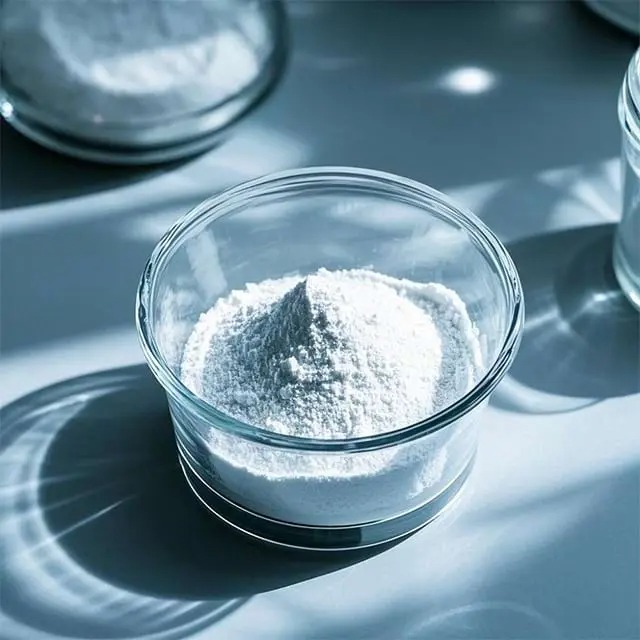
Buyers should review assay values, impurity profiles, and particle size consistency. Reliable documentation supports traceability and compliance. Consistent physical properties indicate stable production control. These indicators help confirm suitability for high-performance use.
| Quality Indicator | What to Review | Why It Matters for High-Performance Use |
| Assay Value | Verified purity percentage (e.g. ≥99%) | Confirms chemical accuracy and reaction reliability |
| Impurity Profile | Trace metals and residual ions | Prevents color distortion and material defects |
| Particle Size Consistency | Uniform granule or powder distribution | Ensures even mixing and predictable processing |
| Documentation & Certification | COA, MSDS, batch records | Supports traceability, audits, and compliance |
| Physical Property Stability | Appearance, solubility, thermal behavior | Indicates stable and controlled production quality |
Supply Considerations for Industrial Users
Supply considerations for industrial users go beyond chemical purity and directly influence operational stability. Reliable suppliers maintain controlled production processes, validated quality systems, and consistent raw material inputs, which help minimize batch variability. Long-term supply agreements support capacity planning and reduce exposure to market fluctuations. Equally important are technical support, documentation transparency, and traceable logistics, all of which enable manufacturers to scale production confidently while maintaining stable performance and regulatory alignment.
Conclusion
Barium Nitrate-High Purity plays a vital role in pyrotechnics, ceramics, and glass by delivering controlled reactions, stable processing, and consistent quality. Its high purity supports vivid flame colors, smooth ceramic surfaces, and precise optical performance in glass. These advantages help manufacturers reduce defects, improve yield, and maintain reliable production standards. Qingdao Red Butterfly Precision Materials Co., Ltd. offers high-purity barium nitrate with strong consistency, professional technical support, and stable supply, creating clear value for customers seeking dependable materials and long-term performance.
FAQ
Q: What is Barium Nitrate-High Purity?
A: Barium Nitrate-High Purity is a refined inorganic oxidizer with low impurities, designed for precise reactions in pyrotechnics, ceramics, and glass.
Q: Why is Barium Nitrate-High Purity preferred in pyrotechnics?
A: Barium Nitrate-High Purity ensures stable green flame color, controlled combustion, and reliable ignition in fireworks and signal flares.
Q: How does Barium Nitrate-High Purity benefit ceramic glazes?
A: Barium Nitrate-High Purity improves glaze flow, surface smoothness, and color consistency during ceramic firing.
Q: What role does Barium Nitrate-High Purity play in glass production?
A: Barium Nitrate-High Purity helps remove bubbles, enhance optical clarity, and control refractive index in specialty glass.
Q: Is Barium Nitrate-High Purity more cost-effective than technical grade?
A: Barium Nitrate-High Purity often reduces defects and rework, lowering overall production costs despite higher unit price.

 English
  العربية
  Français
  Русский
  Español
  Português
  Deutsch
  italiano
  日本語
日本語  한국어
한국어  Nederlands
  Tiếng Việt
  ไทย
ไทย  Polski
  Türkçe
  አማርኛ
አማርኛ  ພາສາລາວ
  ភាសាខ្មែរ
  Bahasa Melayu
  ဗမာစာ
ဗမာစာ  தமிழ்
தமிழ்  Filipino
  Bahasa Indonesia
  magyar
  Română
  Čeština
  Монгол
  қазақ
қазақ  Српски
  हिन्दी
  فارسی
فارسی  Kiswahili
  Slovenčina
  Slovenščina
  Norsk
Norsk  Svenska
  українська
  Ελληνικά
  Suomi
Suomi  Հայերեն
  עברית
עברית  Latine
  Dansk
Dansk  اردو
اردو  Shqip
Shqip  বাংলা
বাংলা  Hrvatski
  Afrikaans
  Gaeilge
  Eesti keel
  Māori
Māori 


