1. Overview of Saponification
Saponification is a vital chemical reaction widely used in various industries, including soap production, biodiesel manufacturing, and other chemical syntheses. In its simplest form, saponification involves the hydrolysis of triglycerides (fats or oils) with an alkali to produce glycerol (glycerin) and fatty acid salts (soaps). The reaction typically occurs in the presence of sodium hydroxide (NaOH) or potassium hydroxide (KOH), which act as strong bases.
Saponification plays a crucial role in the production of soap, a product used for cleaning, hygiene, and cosmetic purposes. It also has applications in biofuel production, particularly in converting oils and fats into biodiesel through transesterification, which involves breaking down triglycerides into biodiesel and glycerol. For all these processes, the efficiency of the reaction is crucial to improving product yield and quality. The reaction is dependent on the catalyst used to accelerate the process, making the choice of catalyst one of the most important factors for achieving high productivity.
2. Introduction to Barium Hydroxide Monohydrate
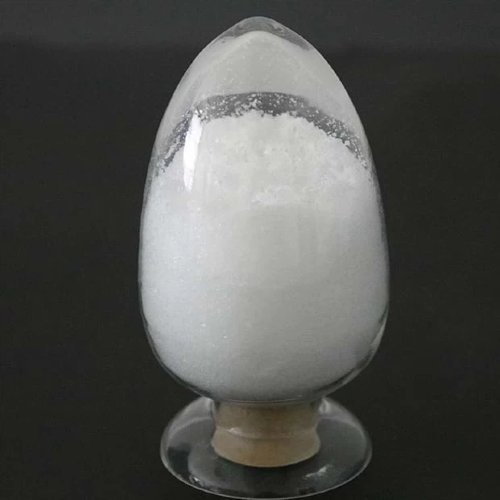
Barium Hydroxide Monohydrate (Ba(OH)₂·H₂O) is an inorganic chemical compound that has a critical role in catalyzing saponification reactions. It is a white, crystalline solid that readily dissolves in water, releasing hydroxide ions (OH⁻) that are essential for breaking the ester bonds in fats and oils. This results in the formation of glycerol and fatty acid salts (soaps), which are key components of the saponification reaction.
Barium Hydroxide Monohydrate is widely utilized due to its strong base properties and its ability to increase the reaction rate in saponification, making it particularly valuable in both small-scale and large-scale industrial applications. In addition to its use in saponification, it is also used in other chemical processes such as waste treatment, lubricants, and the production of specialty chemicals. This article will delve into the role of Barium Hydroxide Monohydrate in saponification, with a focus on its purity, stability, and the positive results it brings to the reaction.
3. What is Barium Hydroxide Monohydrate?
Chemical Composition and Structure
Barium Hydroxide Monohydrate is composed of barium hydroxide and one molecule of water of crystallization. Its molecular formula is Ba(OH)₂·H₂O, where each molecule of Barium Hydroxide Monohydrate consists of one barium ion (Ba²⁺), two hydroxide ions (OH⁻), and one molecule of water (H₂O) as part of the crystal structure. This structure enables the compound to easily dissociate into Ba²⁺ and OH⁻ ions when dissolved in water, which is a key characteristic that makes it effective in catalyzing saponification reactions.
Barium Hydroxide Monohydrate is highly soluble in water, producing a strongly alkaline solution. This makes it highly efficient in catalyzing hydrolysis reactions, particularly in the breakdown of triglycerides during saponification. The presence of the water molecule in its crystal structure also ensures that it can easily participate in aqueous chemical reactions.
Forms and Purity Standards
Barium Hydroxide Monohydrate is typically available in two main grades: technical grade and high-purity grade. The technical grade is generally used for general industrial applications, while the high-purity grade is specifically used in more sensitive applications where low impurity levels are critical, such as pharmaceutical, food, and cosmetic production.
Grade | Purity Level | Application |
Technical Grade | ~95-98% | General chemical processes |
High Purity Grade | ≥99% | Specialized chemical synthesis and high-quality soap production |
High-purity Barium Hydroxide Monohydrate is crucial in industries where precise chemical reactions are necessary. The presence of impurities can interfere with the reaction process, resulting in lower yields or undesirable by-products. Therefore, the purity of the compound directly influences its effectiveness as a catalyst in saponification and other chemical processes.
4. Role of Barium Hydroxide Monohydrate in Saponification Catalysis
Mechanism of Catalysis
In the saponification process, Barium Hydroxide Monohydrate facilitates the breakdown of triglycerides into fatty acid salts and glycerol by providing hydroxide ions (OH⁻). These hydroxide ions attack the ester bonds in the triglycerides, causing the fatty acids to separate from the glycerol backbone. This reaction leads to the formation of soap (the sodium or potassium salts of fatty acids) and glycerol, which are the key products of saponification.
The general equation for the saponification reaction is:
Triglyceride+3NaOH→Glycerol+3Soap (Sodium Salt of Fatty Acids)
Barium Hydroxide Monohydrate acts as a catalyst in this reaction by dissociating in water to form Ba²⁺ and OH⁻ ions, which are responsible for breaking the ester bonds in triglycerides. This enhances the reaction speed, leading to faster production of soap and glycerol.
Advantages of Using Barium Hydroxide Monohydrate for Saponification
The use of Barium Hydroxide Monohydrate as a catalyst in saponification provides several benefits:
Faster Reaction Time: The hydroxide ions from Barium Hydroxide Monohydrate accelerate the reaction, reducing the time required to complete the saponification process.
High Yield: Barium Hydroxide Monohydrate ensures that more triglycerides are converted into soap and glycerol, resulting in higher yields compared to other catalysts.
Cost-Effectiveness: Given its effectiveness, Barium Hydroxide Monohydrate offers a cost-efficient solution for large-scale soap production, reducing the need for more expensive or less efficient catalysts.
The ability to improve reaction efficiency and yield makes Barium Hydroxide Monohydrate a preferred choice in industrial applications.
5. Purity of Barium Hydroxide Monohydrate
Importance of Purity in Catalysis
The purity of Barium Hydroxide Monohydrate plays a critical role in its ability to catalyze saponification reactions. Impurities present in the compound can interfere with the reaction, resulting in lower yields, prolonged reaction times, or the formation of unwanted by-products. High-purity grades of Barium Hydroxide Monohydrate are preferred in applications requiring precise and consistent catalytic activity.
For example, in biodiesel production, where the goal is to achieve high-quality fuel, the presence of impurities in the catalyst can lead to lower conversion rates and affect the final product's quality. Similarly, in soap production, impurities may affect the texture, fragrance, and overall quality of the soap.
Quality Control and Standards
Manufacturers of Barium Hydroxide Monohydrate implement strict quality control procedures to ensure the purity and consistency of the product. These procedures include:
Purity Testing: Regular tests are performed to verify the purity of the compound, ensuring it meets the required standards for various applications.
Contaminant Analysis: The product is tested for contaminants, such as heavy metals, which could compromise the catalytic process and the quality of the end product.
Barium Hydroxide Monohydrate manufacturers often adhere to international standards such as ISO and GMP, ensuring that the product is produced in a controlled environment and meets the necessary specifications for different industrial uses.
6. Stability of Barium Hydroxide Monohydrate in Saponification Reactions
Thermal and Chemical Stability
Barium Hydroxide Monohydrate is known for its excellent stability in both thermal and chemical conditions, which is essential for large-scale saponification reactions. It remains stable at elevated temperatures, which are often required in industrial saponification processes. The ability to maintain its catalytic activity at high temperatures ensures that it continues to provide consistent results throughout the reaction.
However, Barium Hydroxide Monohydrate is hygroscopic, meaning it can absorb moisture from the air, which can affect its stability. Therefore, it is important to store and handle the compound in dry conditions to maintain its effectiveness.
Impact of Stability on Long-Term Use
The stability of Barium Hydroxide Monohydrate ensures that it can be used continuously in long-term industrial processes. In continuous saponification reactors, for example, the catalyst's stability contributes to sustained performance over long periods, reducing the need for frequent replacements and minimizing production downtime.
By maintaining stable performance, Barium Hydroxide Monohydrate improves the efficiency and cost-effectiveness of industrial operations, making it an ideal choice for large-scale production.
7. Results of Using Barium Hydroxide Monohydrate in Saponification Catalysis
Enhanced Reaction Efficiency
The addition of Barium Hydroxide Monohydrate as a catalyst significantly enhances the efficiency of the saponification process. It accelerates the reaction by providing hydroxide ions (OH⁻), which directly attack and break the ester bonds in triglycerides. This results in a faster conversion of triglycerides into soap and glycerol.
Parameter | Without Barium Hydroxide Monohydrate | With Barium Hydroxide Monohydrate |
Reaction Time | 4-6 hours | 1-2 hours |
Soap Yield | Lower | Higher |
Glycerol Production | Lower | Higher |
The table above demonstrates the significant improvements in reaction time, soap yield, and glycerol production when Barium Hydroxide Monohydrate is used as a catalyst.
Improved Product Quality
The use of Barium Hydroxide Monohydrate not only speeds up the saponification reaction but also improves the quality of the final product. Soap produced using Barium Hydroxide Monohydrate tends to have a smoother texture, enhanced cleansing properties, and greater stability over time. This makes it particularly useful in high-end soap production, where product quality is a priority.
8. Conclusion
Barium Hydroxide Monohydrate is a highly effective catalyst for saponification reactions, delivering significant advantages, such as reduced reaction times, increased yields, and superior product quality. Its exceptional purity and stability make it an ideal choice for both small-scale and large-scale industrial applications. As the demand for efficient, sustainable, and cost-effective chemical processes continues to grow, Barium Hydroxide Monohydrate remains a key catalyst in various chemical applications, especially in saponification.
At Qingdao Red Butterfly Precision Materials Co., Ltd., we specialize in providing high-quality Barium Hydroxide Monohydrate tailored to meet the needs of diverse industries. Whether you're looking to enhance the efficiency of your saponification processes or seeking a reliable catalyst for other chemical reactions, our products offer unmatched performance and consistency.
For more information on our Barium Hydroxide Monohydrate and to explore how we can support your specific requirements, feel free to get in touch with us. Our team is ready to assist you with expert guidance and the best solutions for your business needs.
9. FAQ
What is the role of Barium Hydroxide Monohydrate in saponification?
Barium Hydroxide Monohydrate acts as a catalyst by providing hydroxide ions (OH⁻), which break the ester bonds in triglycerides during saponification, resulting in soap and glycerol.
How does the purity of Barium Hydroxide Monohydrate affect its performance in saponification?
The purity of Barium Hydroxide Monohydrate is crucial for efficient catalysis. Higher purity ensures more consistent and effective reactions, leading to higher yields and better-quality products.
Is Barium Hydroxide Monohydrate stable under varying temperature conditions?
Yes, Barium Hydroxide Monohydrate is stable over a wide range of temperatures, making it suitable for industrial saponification processes. However, it must be stored in a dry environment to prevent moisture absorption.
Can Barium Hydroxide Monohydrate be used in large-scale saponification processes?
Yes, Barium Hydroxide Monohydrate is ideal for large-scale saponification processes due to its high catalytic efficiency and stability, which ensures consistent results in continuous production systems.

 English
  العربية
  Français
  Русский
  Español
  Português
  Deutsch
  italiano
  日本語
日本語  한국어
한국어  Nederlands
  Tiếng Việt
  ไทย
ไทย  Polski
  Türkçe
  አማርኛ
አማርኛ  ພາສາລາວ
  ភាសាខ្មែរ
  Bahasa Melayu
  ဗမာစာ
ဗမာစာ  தமிழ்
தமிழ்  Filipino
  Bahasa Indonesia
  magyar
  Română
  Čeština
  Монгол
  қазақ
қазақ  Српски
  हिन्दी
  فارسی
فارسی  Kiswahili
  Slovenčina
  Slovenščina
  Norsk
Norsk  Svenska
  українська
  Ελληνικά
  Suomi
Suomi  Հայերեն
  עברית
עברית  Latine
  Dansk
Dansk  اردو
اردو  Shqip
Shqip  বাংলা
বাংলা  Hrvatski
  Afrikaans
  Gaeilge
  Eesti keel
  Māori
Māori 


