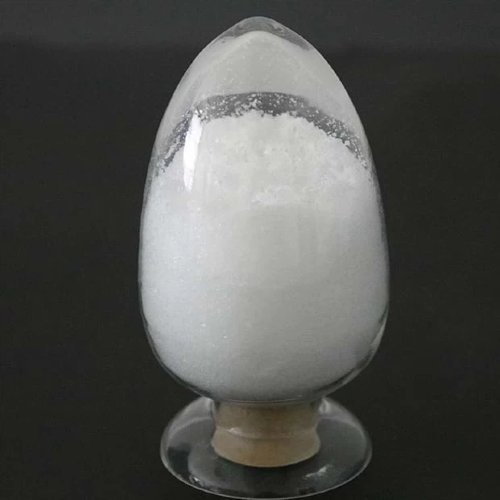
Industrial saponification processes often suffer from unexplained fluctuations. Chemical engineers struggle to maintain product consistency despite strict parameter controls. Often, the hidden culprit lies deep within the catalyst itself. Impurities like trace iron create major operational hurdles in complex reactor environments. Unwanted iron triggers severe product discoloration, unpredictable reaction rates, and inconsistent yields. Consequently, manufacturers spend heavily on aggressive post-reaction purification steps.
To solve this problem, many facilities are turning to high-purity Barium Hydroxide Monohydrate as a precision solid base catalyst. We designed this guide for chemical engineers and procurement teams seeking to stabilize catalysis operations. You will learn how controlling iron contamination optimizes overall process ROI. Furthermore, we will provide a clear, actionable framework for evaluating and implementing this advanced solid base effectively.
Key Takeaways
Transitioning to Barium Hydroxide Monohydrate reduces side reactions caused by iron impurities, directly improving end-product yield and color stability.
Successful implementation requires adherence to strict handling protocols and matching catalyst particle size/assay to specific reactor dynamics.
Upgrading to high-purity, low-iron monohydrate aligns with sustainable process intensification by reducing waste streams and energy consumption.
The Impact of Iron Contamination on Saponification Catalysis
Trace iron (Fe) acts as an uncontrolled secondary catalyst in saponification. It drives unwanted oxidation and rapidly degrades product quality. Even a few parts per million can catalyze side reactions. These unwanted pathways produce dark color bodies and undesirable organic byproducts. When iron enters the reactor, you lose control over the primary chemical pathway. You then face a compromised end product requiring costly rework.
Success Criteria for Catalysis
You must establish baseline metrics for successful catalysis to evaluate improvements. A reliable process hits specific targets consistently. Process engineers generally define operational success using three primary criteria:
Predictable kinetics: The reaction must proceed at a known, stable rate.
Minimized byproducts: Side reactions must remain negligible to maximize yield.
Elimination of post-treatment: The final product should not require aggressive bleaching or extensive filtration.
The Hydration Variable
Catalyst hydration states directly influence reaction dynamics. Standard forms like the octahydrate introduce eight moles of water per mole of catalyst. This excess moisture disrupts anhydrous or low-moisture reaction environments. It alters stoichiometric balances and triggers unwanted hydrolysis. In contrast, the monohydrate form introduces minimal water. It gives you superior stoichiometric control. This strict control prevents side reactions and protects moisture-sensitive intermediates.
Common Mistake: Many engineers ignore catalyst hydration states when scaling up bench trials. Failing to account for bound water often causes pilot plant batches to fail.
Evaluating Solution Approaches: Standard Bases vs. Barium Hydroxide Monohydrate
Choosing the right alkaline catalyst requires balancing availability, purity, and process compatibility. Let us explore the differences between standard commodity bases and specialized alternatives.
Commodity Bases (NaOH/KOH)
Sodium hydroxide and potassium hydroxide offer high availability and low upfront costs. However, they frequently carry higher impurity profiles. These impurities lead to inconsistent phase separation. They also cause unintended soap formation during esterification. As a result, you often spend more time and energy washing the final product to remove these emulsions.
Barium Hydroxide Octahydrate
This octahydrate form serves as an effective alkaline base. However, it presents a significant drawback for moisture-sensitive operations. It introduces a large volume of water into the reactor. This extra water easily disrupts carefully balanced non-aqueous systems. You might experience extended drying times or reduced conversion efficiency.
Barium Hydroxide Monohydrate
This precision catalyst delivers highly concentrated alkalinity. It achieves this while introducing minimal water into your system. By keeping water levels low, you maintain the integrity of sensitive reaction pathways. This targeted approach improves conversion rates and limits wasteful hydrolysis.
The Low-Iron Advantage
Advanced manufacturing techniques produce high-purity Barium Hydroxide by systematically removing iron. Removing this primary threat neutralizes catalytic inconsistency. When you eliminate trace iron, you eliminate the unpredictable oxidation cycles. Your saponification process becomes stable, repeatable, and highly efficient.
Comparison Chart: Alkaline Catalyst Profiles
Catalyst Type | Water Content | Impurity Risk (Iron) | Process Suitability |
Commodity NaOH/KOH | Variable (often aqueous) | High (leads to emulsions) | Basic saponification, high-tolerance systems |
Octahydrate | High (8 moles) | Moderate to Low | Aqueous environments, moisture-tolerant synthesis |
Monohydrate | Minimal (1 mole) | Extremely Low (<10 ppm) | Precision anhydrous, high-yield, low-color applications |
Core Evaluation Dimensions for Procurement and Engineering
Procurement teams and chemical engineers must collaborate closely when evaluating new catalysts. A simple cost comparison will fail. You need a comprehensive evaluation framework based on strict technical dimensions.
Purity and Assay Specs
A minimum assay of greater than 99% is absolutely non-negotiable for high-yield applications. Strict heavy metal and iron limits must remain below 10 ppm. High purity guarantees reliable stoichiometry. If the assay fluctuates, your reaction kinetics will drift. Maintaining strict iron limits prevents the product degradation issues we discussed earlier.
Physical Characteristics
You must evaluate particle size distribution (PSD) and overall flowability. Poorly flowing powders cause bridging in automated feed systems. Bridging halts production and requires manual intervention. Consistent particle sizes ensure uniform dispersion inside the reactor vessel. Uniform dispersion prevents localized hot spots and incomplete conversions.
Best Practice: Always request detailed PSD graphs from suppliers, not just a median micron size. A wide distribution curve often causes clumping.
Compliance and Standards
Align your catalyst specifications with relevant industry requirements. For instance, food-contact chemicals must meet stringent Food Chemicals Codex (FCC) guidelines. Other specialized processes might require specific patent-driven parameters. Your supplier must document their compliance clearly and transparently to protect your downstream liabilities.
Scalability
Assess the supplier’s ability to scale production. They must provide consistent lot-to-lot purity without creating supply chain bottlenecks. An excellent bench-scale trial means nothing if the supplier cannot deliver reliable bulk quantities. Audit their manufacturing capacity and quality control protocols thoroughly.
Implementation Considerations and Risk Mitigation
Introducing a new solid base catalyst requires careful planning. You must manage chemical risks, validate performance, and train your staff properly.
Handling and Toxicity Protocols
We must address the safety realities directly. Barium compounds exhibit toxicity and require strict safety protocols. Operators must use appropriate personal protective equipment (PPE). Facilities must implement robust dust control measures, including local exhaust ventilation (LEV). You must ensure secure, dry storage to mitigate all toxicity and moisture risks. Always align your protocols with OSHA and EPA guidelines for heavy metal handling.
Pilot Testing (Shortlisting Logic)
A systematic testing approach minimizes production risks. Do not jump straight from paper to commercial production. Follow this clear logic to validate the catalyst:
Step 1: Document Review. Request Certificates of Analysis (CoA) from potential suppliers. Reject any CoA that does not specifically note trace iron content.
Step 2: Bench-Scale Trials. Conduct small laboratory runs. Map the reaction kinetics carefully. Compare these new kinetics against your current baselines. Look for improvements in color and speed.
Step 3: Pilot Plant Rollout. Move to an intermediate reactor size. Verify the physical dispersion rates of the powder. Measure the efficiency of post-reaction filtration under realistic pressure conditions.
Change Management
Technology changes require human adaptation. You must train operators on the distinct differences in handling the new catalyst. The monohydrate behaves differently than the octahydrate or liquid bases. It flows differently and reacts with less moisture. Update your standard operating procedures (SOPs) and run supervised trial shifts to build operator confidence.
Conclusion
Transitioning to a high-purity solid base is a strategic operational decision. It is not a simple commodity purchase. It serves as a powerful process optimization tool. By utilizing this specialized catalyst, you eliminate the variables that cause erratic production runs.
Controlling iron at the catalyst stage proves vastly more efficient than treating contaminated products downstream. Proactive prevention always beats reactive purification. You save energy, preserve yield, and extend equipment lifecycles by stopping contamination before it enters the reactor.
To begin your optimization journey, take three immediate steps. First, audit your current catalyst CoAs for hidden iron levels. Second, calculate the true cost of your lost yield and extra purification steps. Finally, request technical samples of low-iron monohydrate to initiate your bench-scale trials today.
FAQ
Q: Why is Barium Hydroxide Monohydrate preferred over the octahydrate form in specific saponification reactions?
A: The monohydrate form introduces significantly less free water into the reactor compared to the octahydrate. This reduction in moisture prevents unwanted hydrolysis and protects moisture-sensitive intermediates. It provides precise stoichiometric control, which ensures stable reaction kinetics and higher yields in anhydrous environments.
Q: How does trace iron affect the final quality of saponified products?
A: Trace iron acts as an unpredictable secondary catalyst. It triggers unwanted oxidation reactions during synthesis. This oxidation causes severe product discoloration, degrades chemical stability, and generates undesirable organic byproducts. Ultimately, it lowers the percentage of prime-grade material and forces costly downstream bleaching.
Q: What are the standard iron limits to look for when evaluating Barium Hydroxide suppliers?
A: For high-yield, industrial applications, you should look for strict purity specifications. An assay of greater than 99% is required. Trace iron levels should strictly remain below 10 parts per million (ppm). These limits ensure consistent performance and prevent product degradation.
Q: What safety compliance frameworks apply when transitioning to a Barium-based catalyst?
A: Barium compounds are toxic and require adherence to OSHA and EPA handling guidelines for heavy metals. Facilities must implement proper local exhaust ventilation (LEV) to control dust. Workers must use correct PPE, and plants should strongly consider closed-loop dispensing systems to prevent exposure.

 English
  العربية
  Français
  Русский
  Español
  Português
  Deutsch
  italiano
  日本語
日本語  한국어
한국어  Nederlands
  Tiếng Việt
  ไทย
ไทย  Polski
  Türkçe
  አማርኛ
አማርኛ  ພາສາລາວ
  ភាសាខ្មែរ
  Bahasa Melayu
  ဗမာစာ
ဗမာစာ  தமிழ்
தமிழ்  Filipino
  Bahasa Indonesia
  magyar
  Română
  Čeština
  Монгол
  қазақ
қазақ  Српски
  हिन्दी
  فارسی
فارسی  Kiswahili
  Slovenčina
  Slovenščina
  Norsk
Norsk  Svenska
  українська
  Ελληνικά
  Suomi
Suomi  Հայերեն
  עברית
עברית  Latine
  Dansk
Dansk  اردو
اردو  Shqip
Shqip  বাংলা
বাংলা  Hrvatski
  Afrikaans
  Gaeilge
  Eesti keel
  Māori
Māori 


